
On the coast of Karnataka, somewhere between Mangalore and Gokarna, lies a town called Baindur (also spelled as Byndoor). On landing there, the place appeared to be a settlement from a different time, one that the highways we had forgotten about. Dense vegetation, sparse population and little or no activity. Network connectivity was limited and sporadic and the roads and paths were muddy and narrow and some led to nowhere. It took us a few attempts and some creativity to reach our accommodation, Praana Experience, right next to the Arabian Sea deep inside the settlement.
It was a small corner of the world, nestled at the edge of the ghats , hugging the the sea. It was clean, lush and quiet. Well, quiet except for the dense sounds of nature, and an amazing number and variety of birds.
Due to its location and relative detachment from the regular tourist circuit, Baindur seems to be a place with a huge diversity of birds, making it a birder’s paradise. It has a dynamic micro climate from lying at the intersection of the Arabian Sea, the Baindur River and the moist forests of the Western Ghats, which makes it a good location for both migratory and sedentary birds.
Almost everyone I met there was indulging in the hobby, spotting and identifying the birds flying into the garden. There was even a birding book ready at hand, full of sticky tab markings the species they had spotted over the years.
I am in no way a zoologist, or an ornithologist and am barely a birder, but I do enjoy observing and shooting feathered fauna doing their things, and I had a good time doing so in Baindur over those three days. The following are some of the birds that I managed to capture. Please treat the claims as probable.
Common Tailorbird (Orthotomus sutorius)
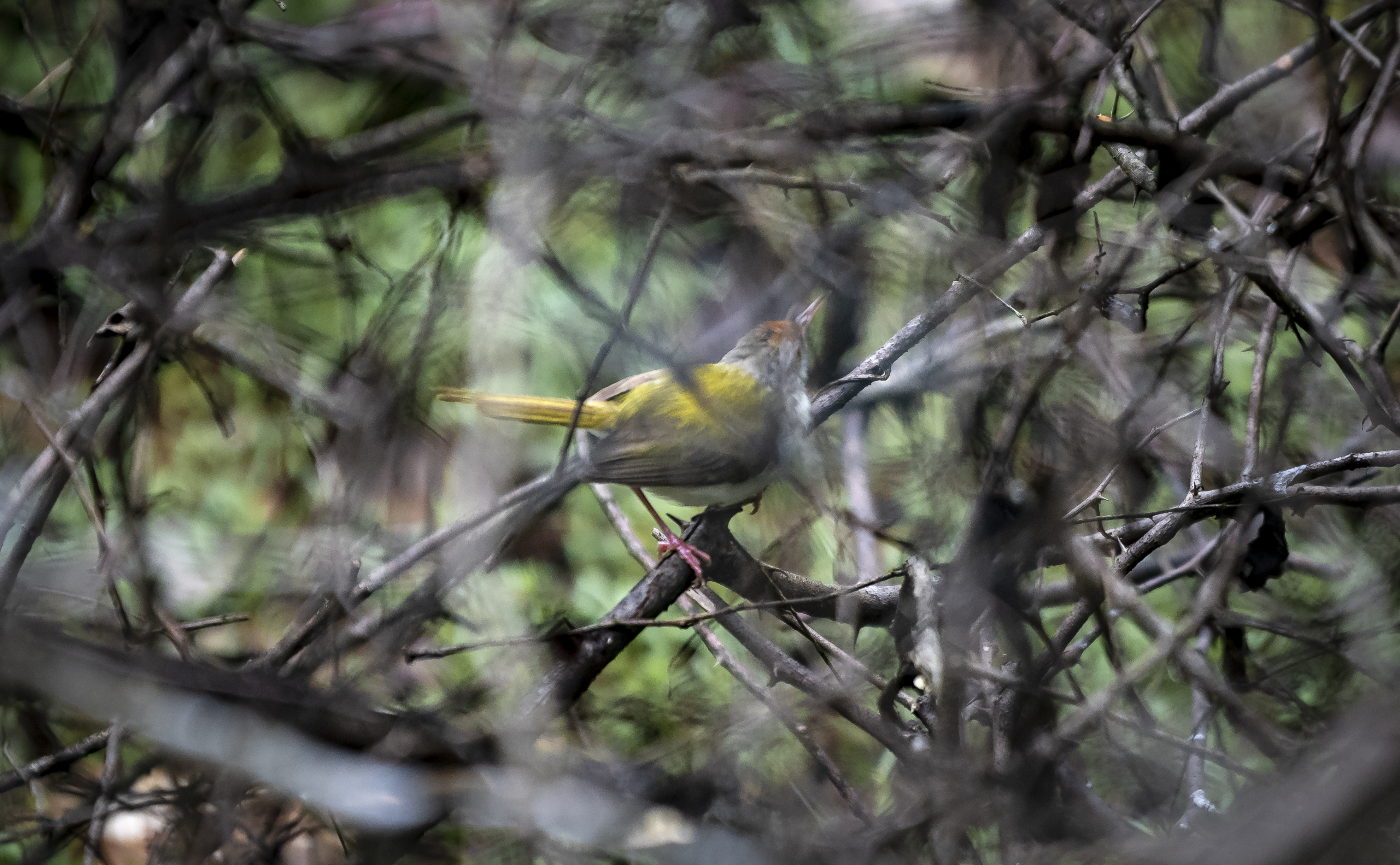
Since I was a kid, I have been fascinated with the works of ‘fabric’ birds, i.e. weaver and tailor. Its amazing to me how they skilfully and meticulously collect and work on strand of material to build up their abodes. However this was the first time ever that I actually saw one.
Here was a tailorbird hopping around in the mesh of a thorny bush, likely looking for a place to build (sew) a nest. The bush would provide protection for the tiny birds and the leaves that they would sew together to build their nest would also act as a camouflage from predators.
Ashy Drongo (Dicrurus leucophaeus)
This one was tricky and confusing. Was it a swallow, or was it a corvid, maybe a magpie. It turned out to be a drongo, an Ashy drongos to be precise.
These grey-black birds with forked tails were zooming around all over the place, and they appeared to be pretty sharp and bold too.
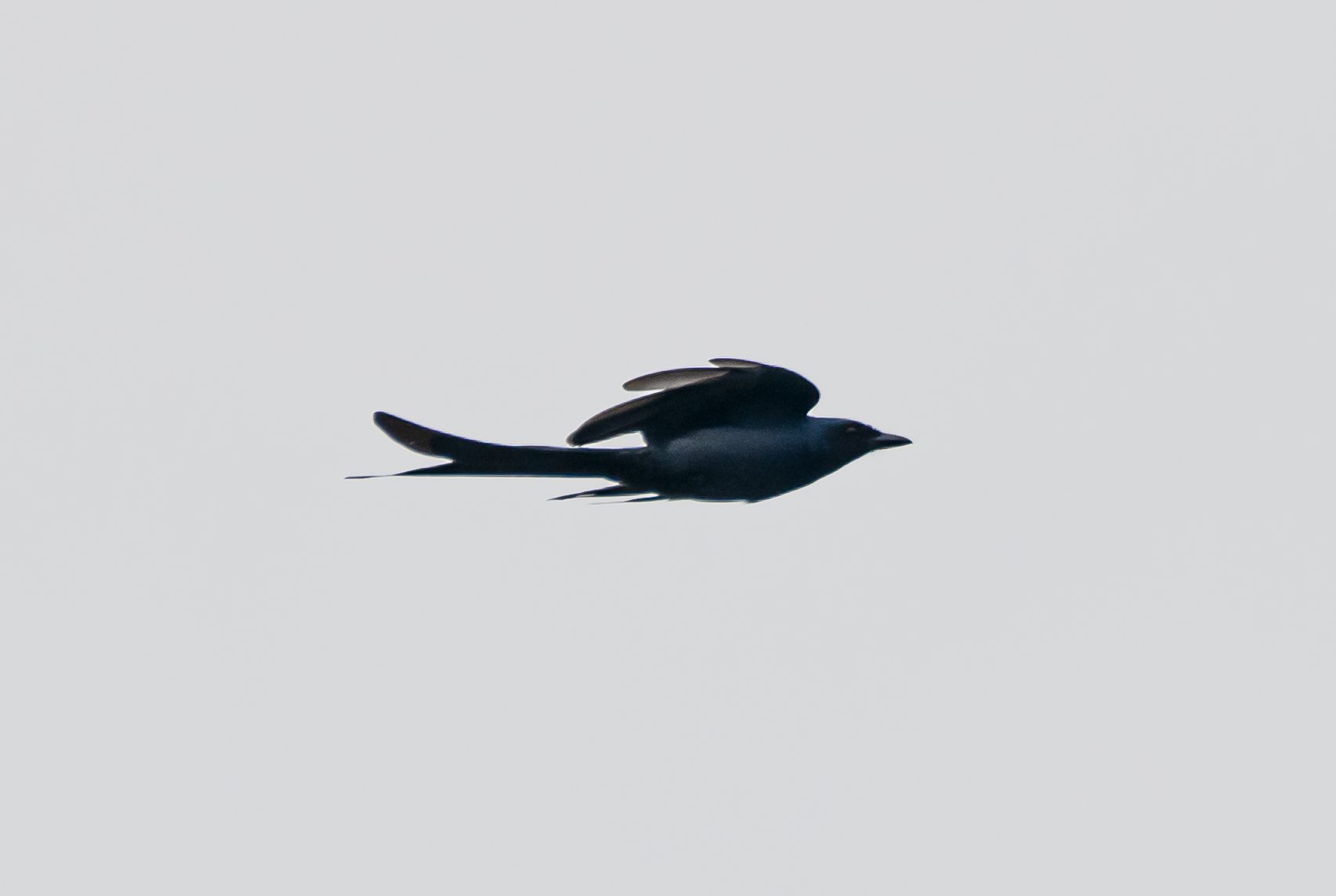
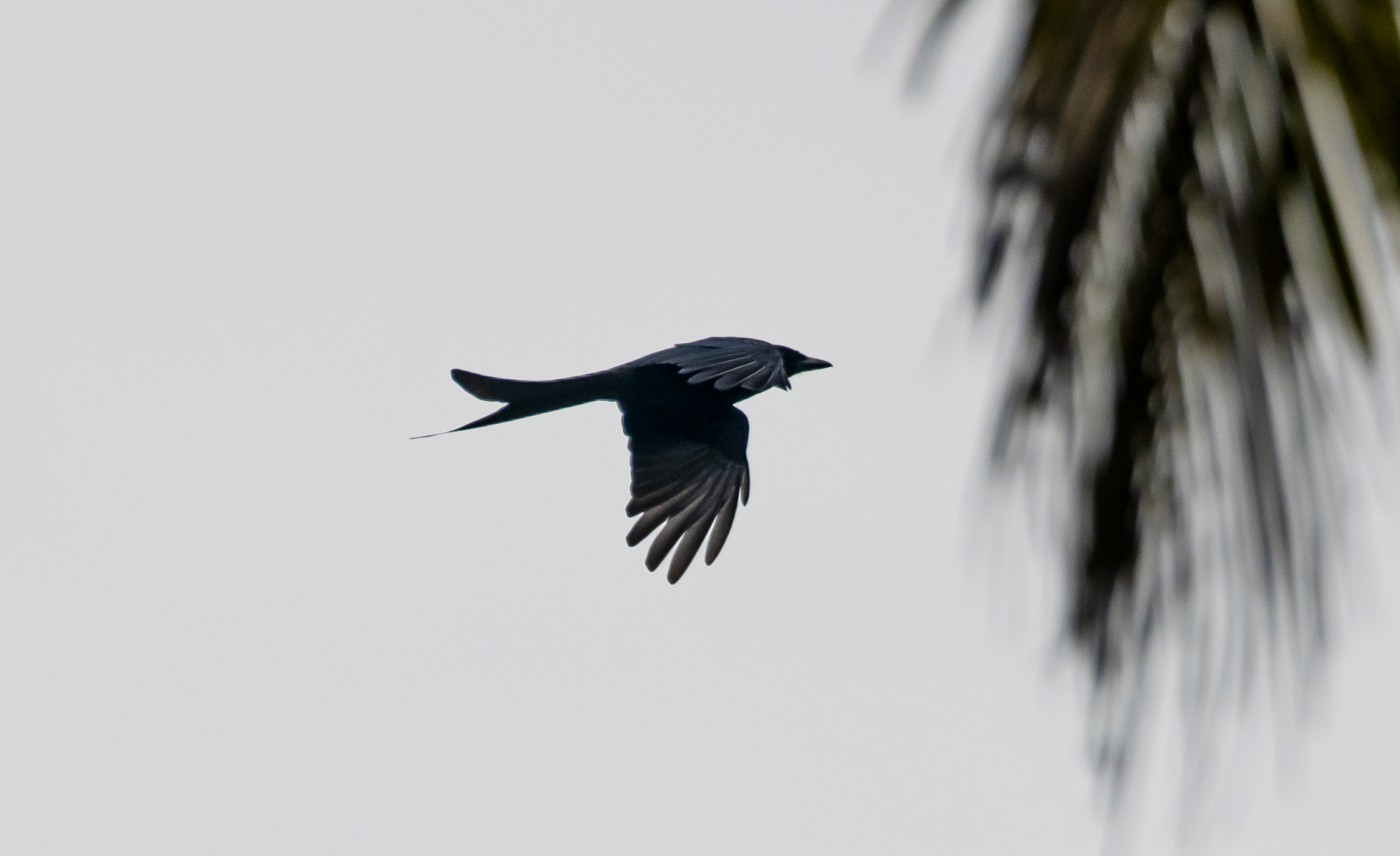
Identifying her needed a bit of detective work. She could be a Black Drongo as well, but those are distinguished by a characteristic white spot at the base of their bill known as the rictal spot. This one clearly did not have it, so she was most likely an Ashy Drongo.
Another feature which suggests this one likely is an Ashy Drongo is the deep crimson eyes. The Black Drongo’s eyes are supposed to be darker.
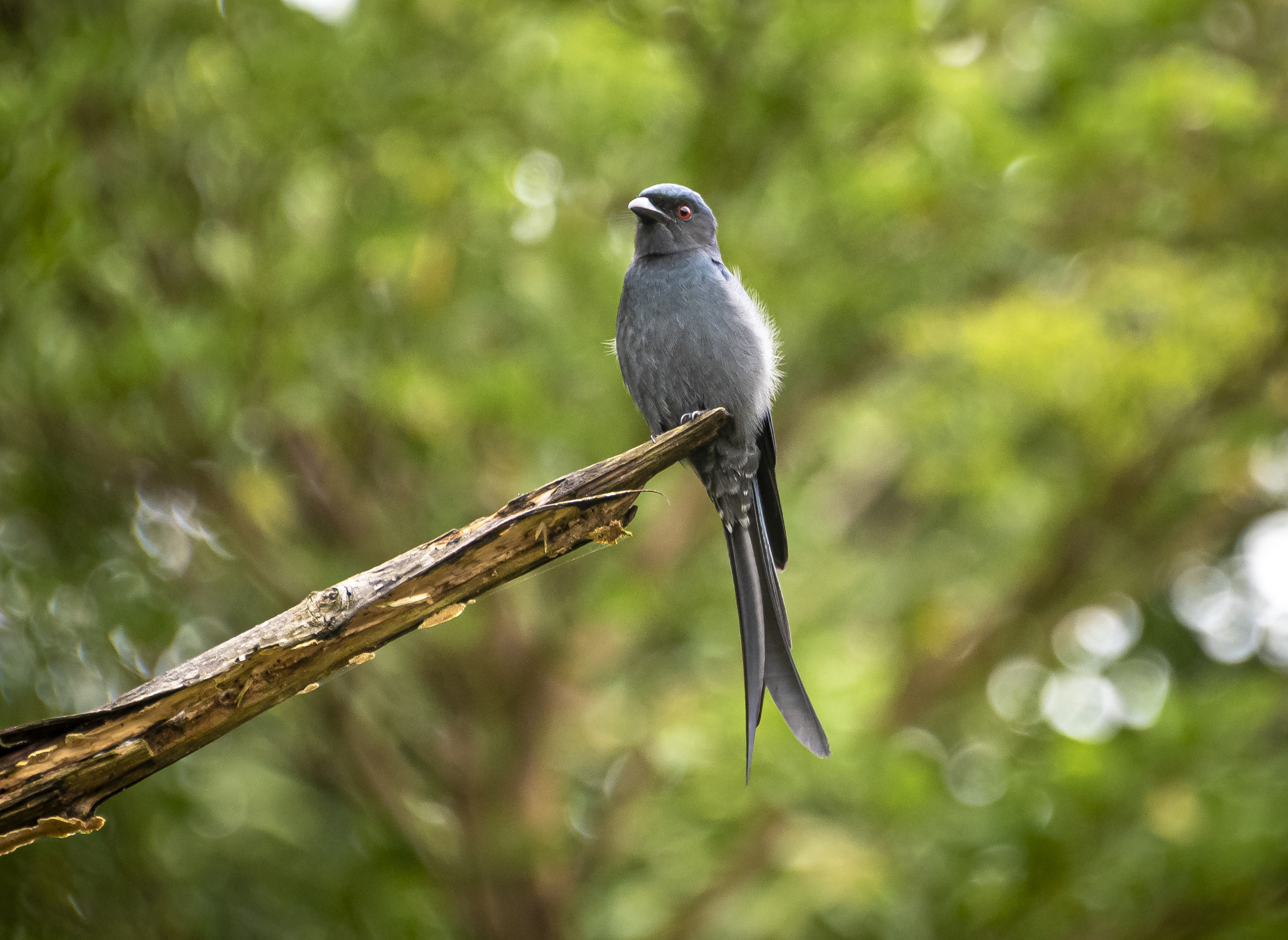
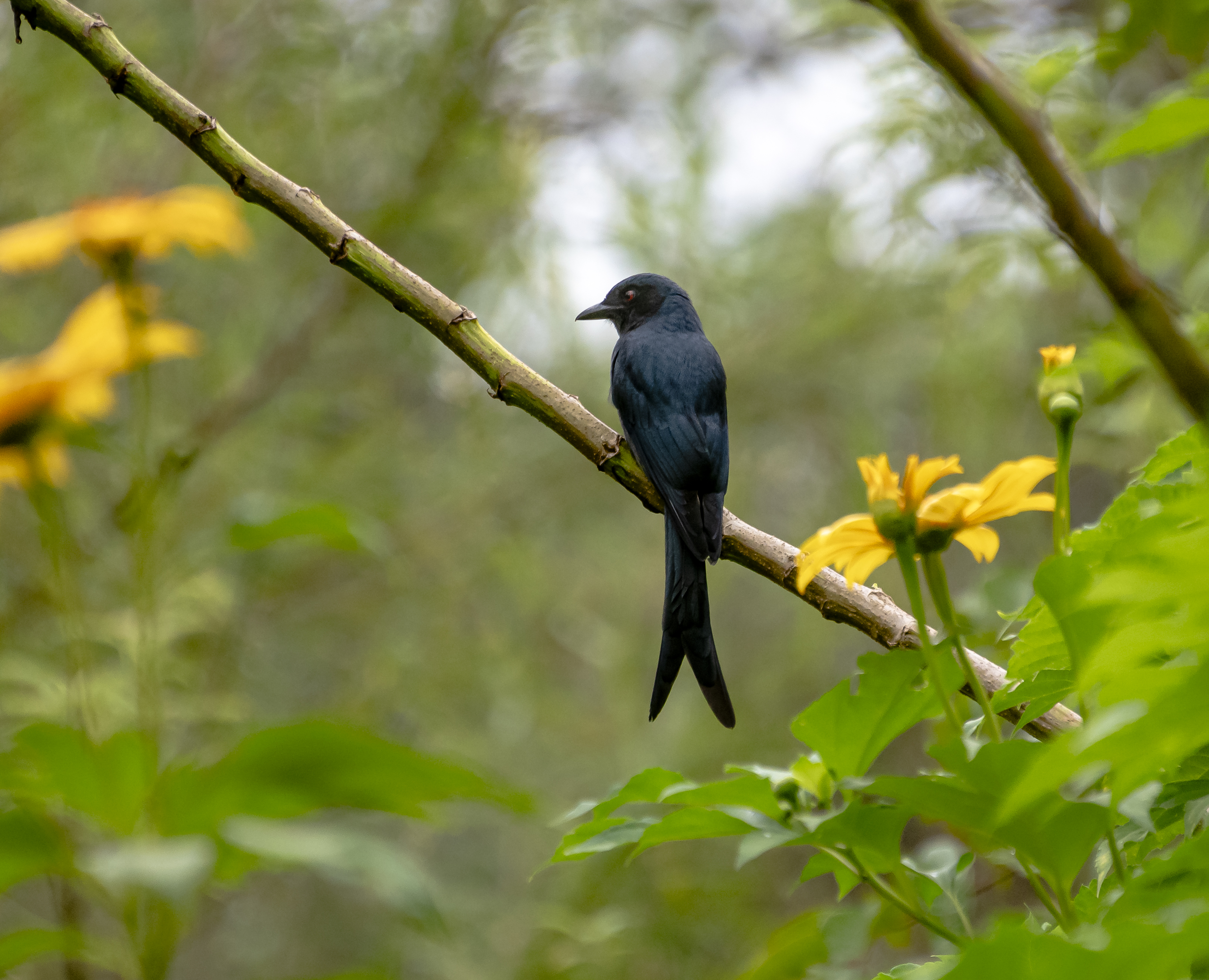
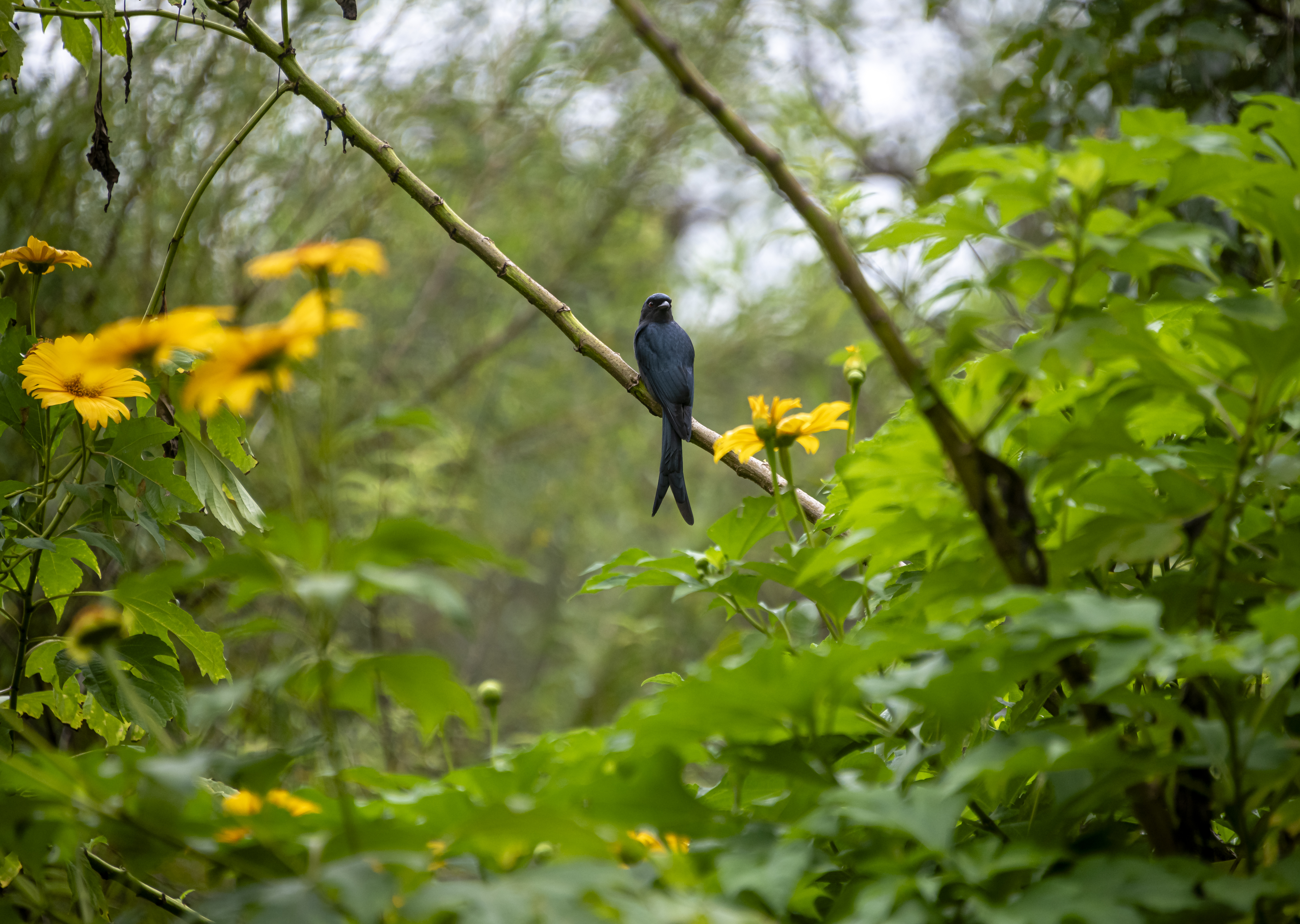
Unlike the blacks, the ashies are migratory birds that happen to be in this area during winter months. So, seeing them doing their acrobatics here was very fortuitous.
Common Iora (Aegithina tiphia)
While strolling around the town, I noticed a yellow-green spot swoop into the foliage of a tree and merge into the canopy.
I tried to chase after her, but she seemed to be a shy one. This was the clearest shot that I could get.
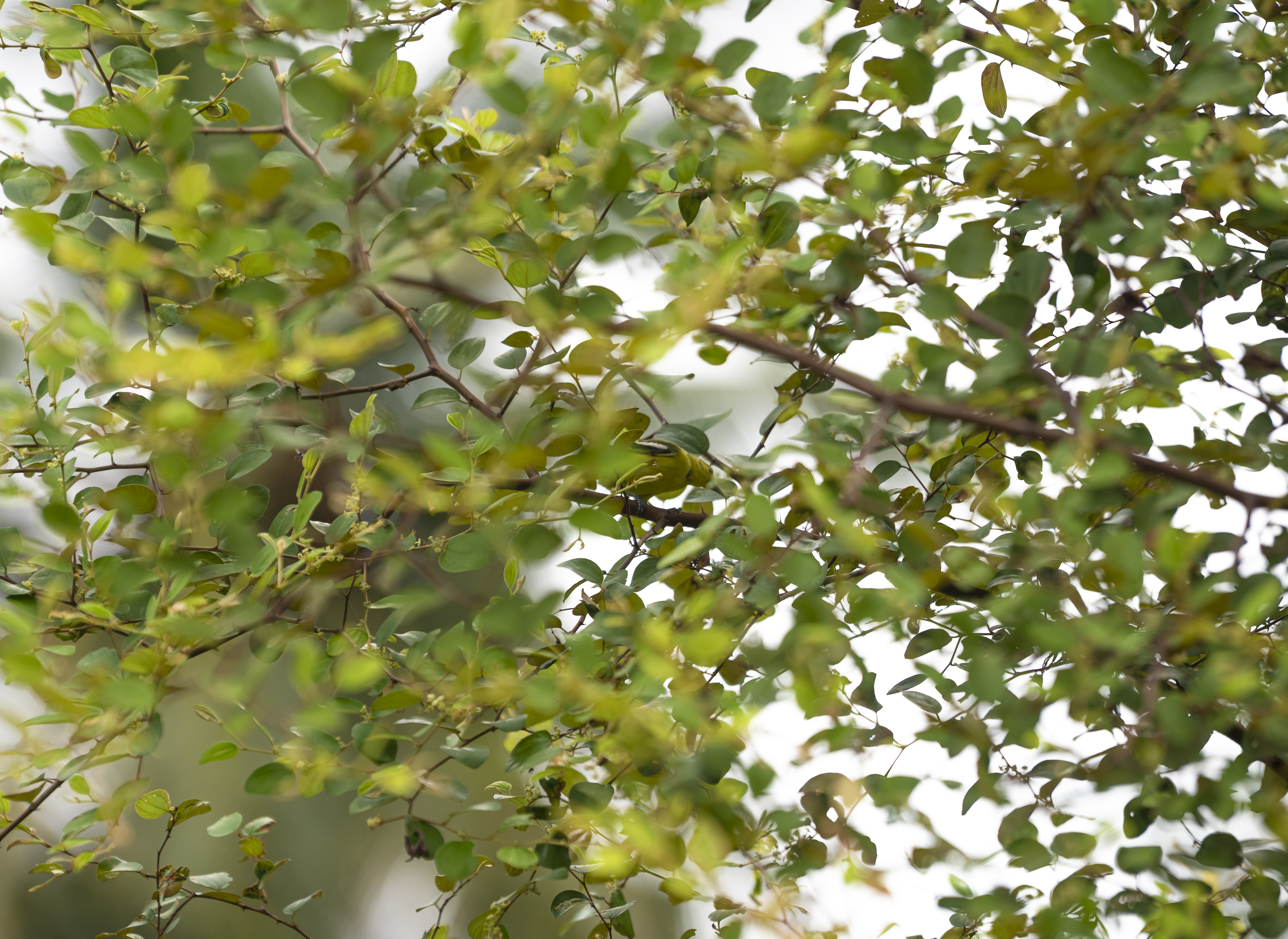
Given the foliage-dwelling behaviour, olive plumage and dark patterns on the wings, this one was most likely a Common Iora. A pretty sparrow-sized songbird with a spectacular courtship display.
White-throated Kingfisher (Halcyon smyrnensis)
Also while walking around the town I came across this fellow.
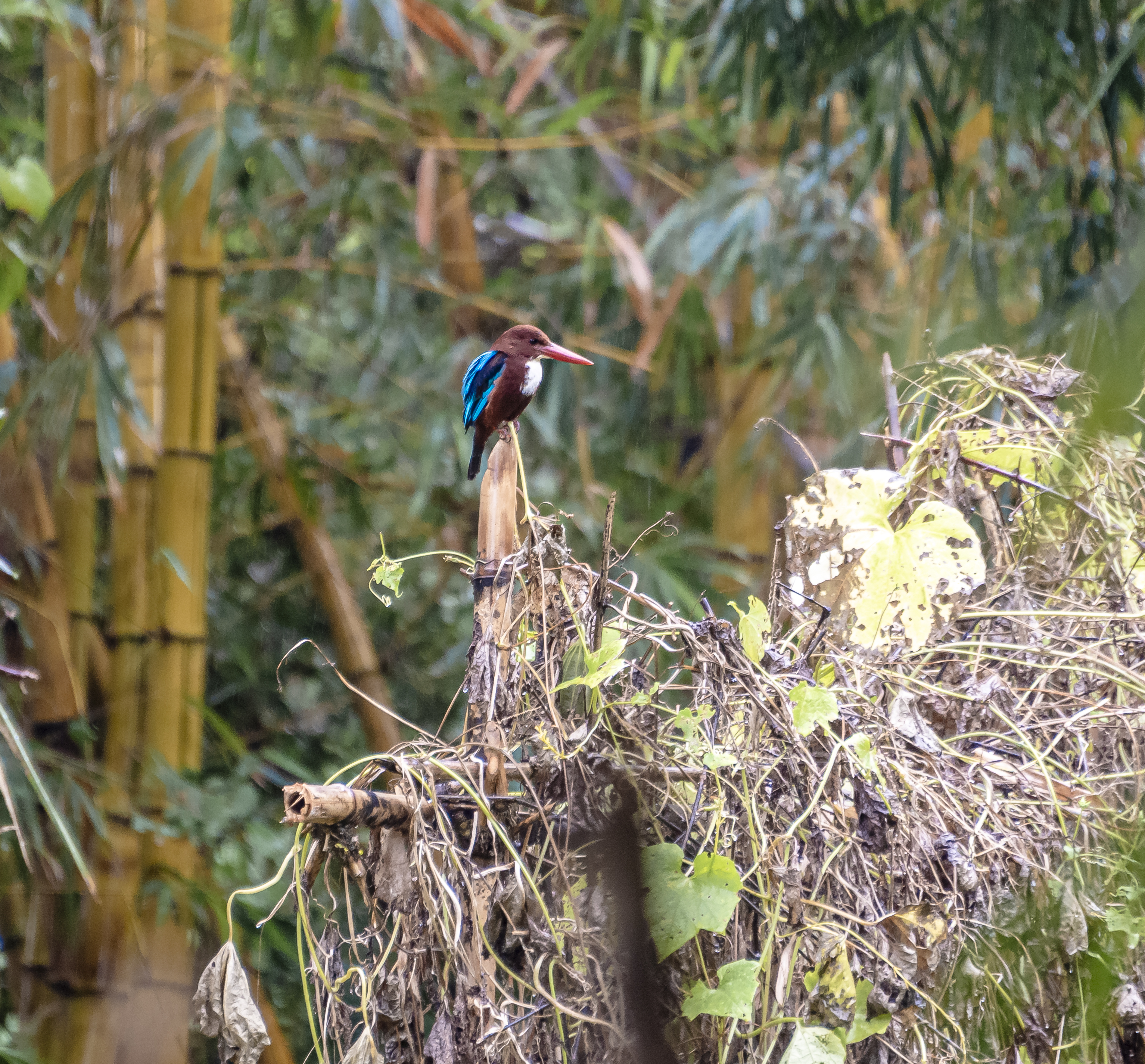
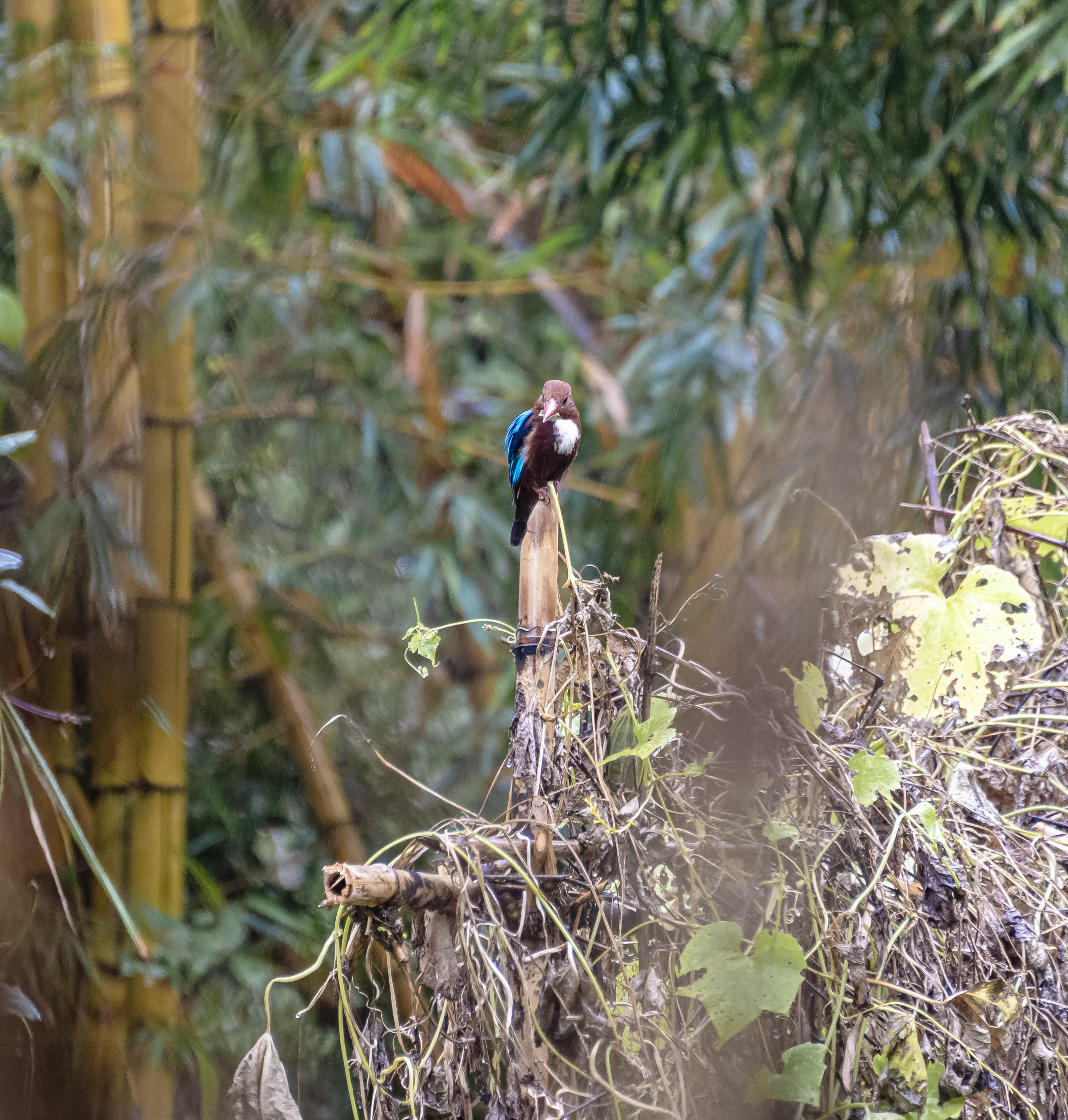
True to character, I found her next to a farm and nowhere close to a water body. Unlike most other kingfishers the White-throated Kingfisher are not strictly depended on aquatic habitats. Its diet includes insects, lizards, frogs, small snakes, rodents and occasionally other birds, as well as fish.
Indian Pond Heron (Ardeola grayii)
Further down the path I noticed a compact brown shape bobbing on a laterite fence.
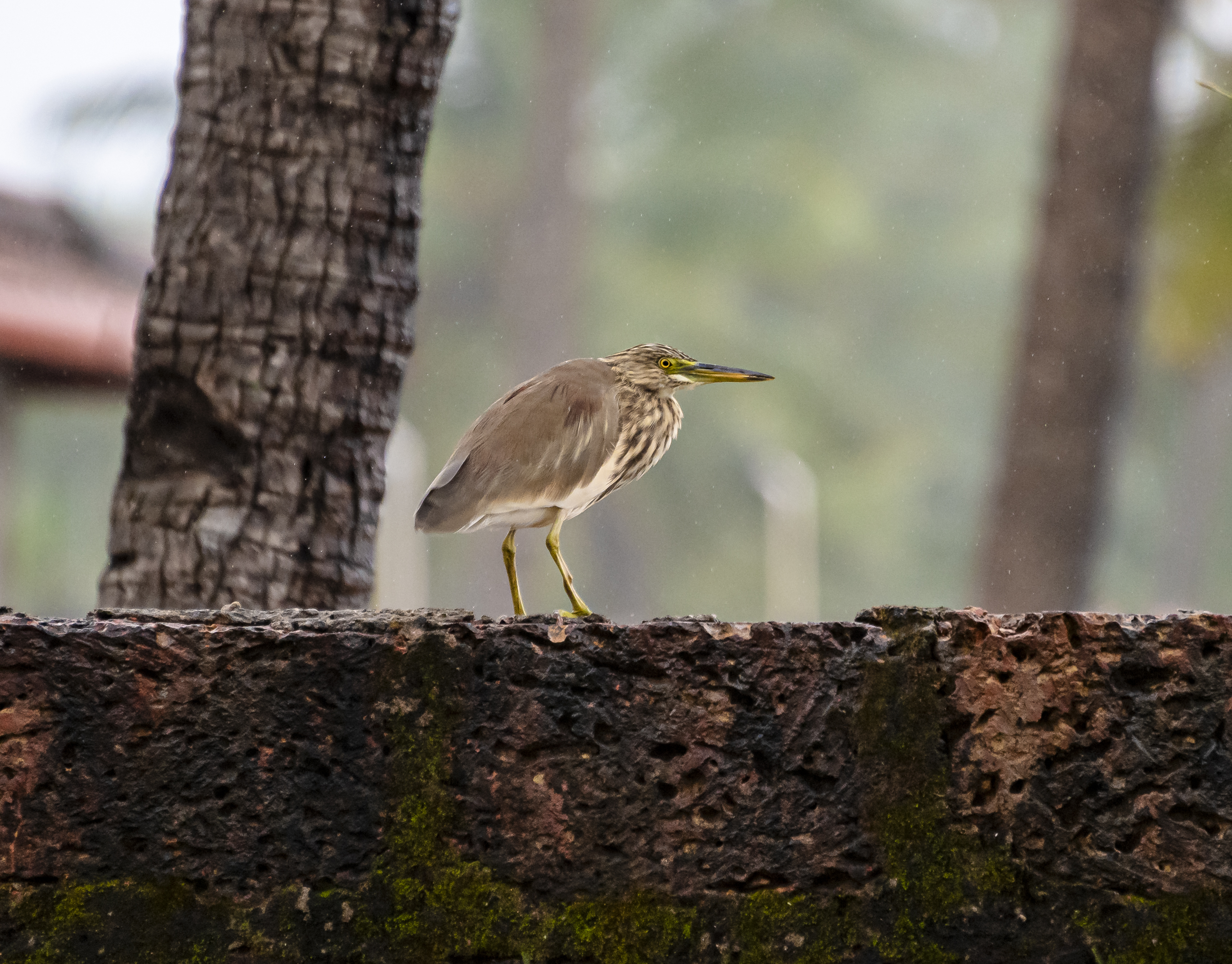
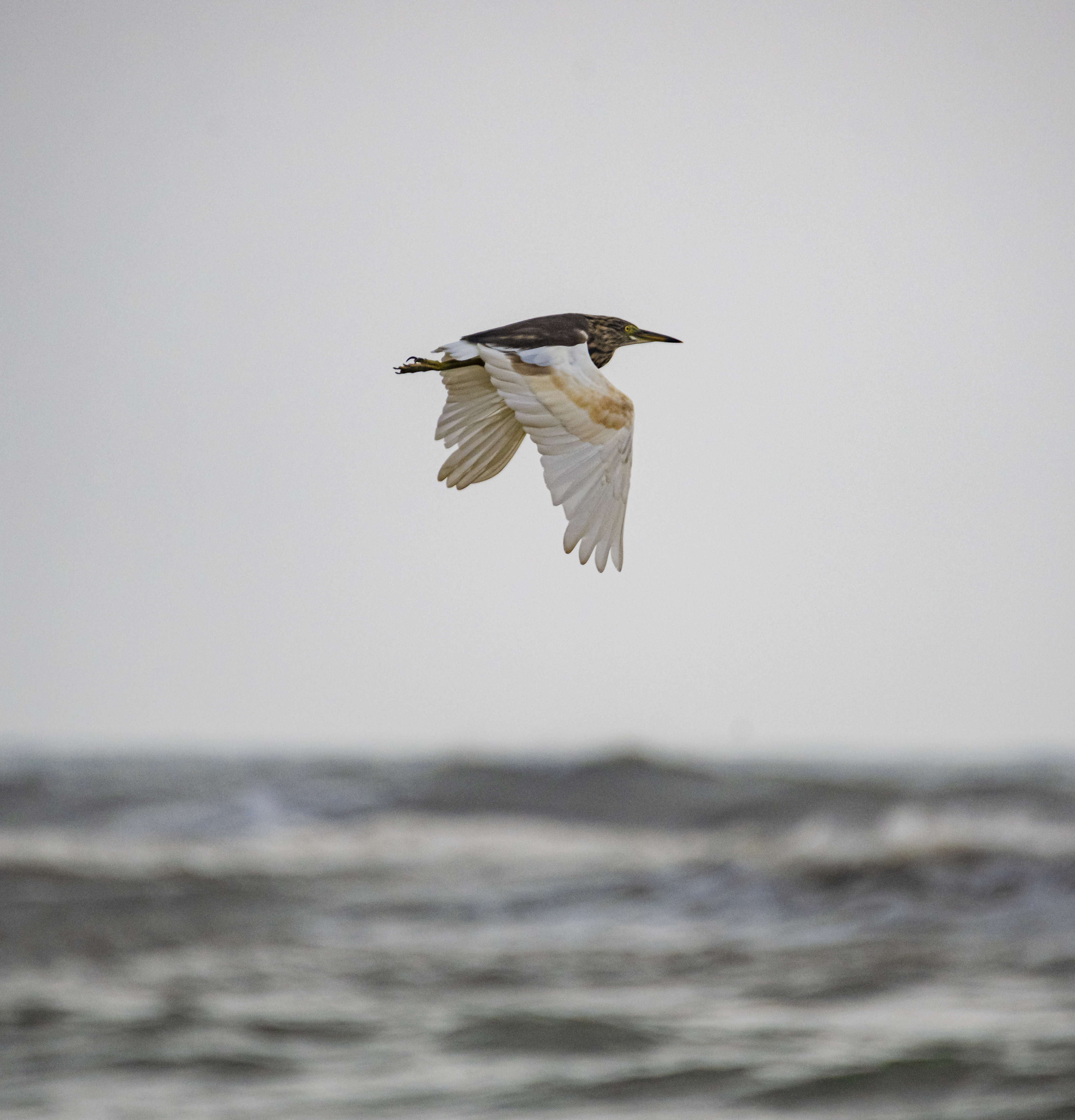
This was an Indian Pond Heron, its dull brown plumage helps it camouflage itself well on land, that as well may be because I find them funny, clumsy and grumpy looking. But that is until they take flight.
As I walked up to this one, she decided to make an exit and took off.
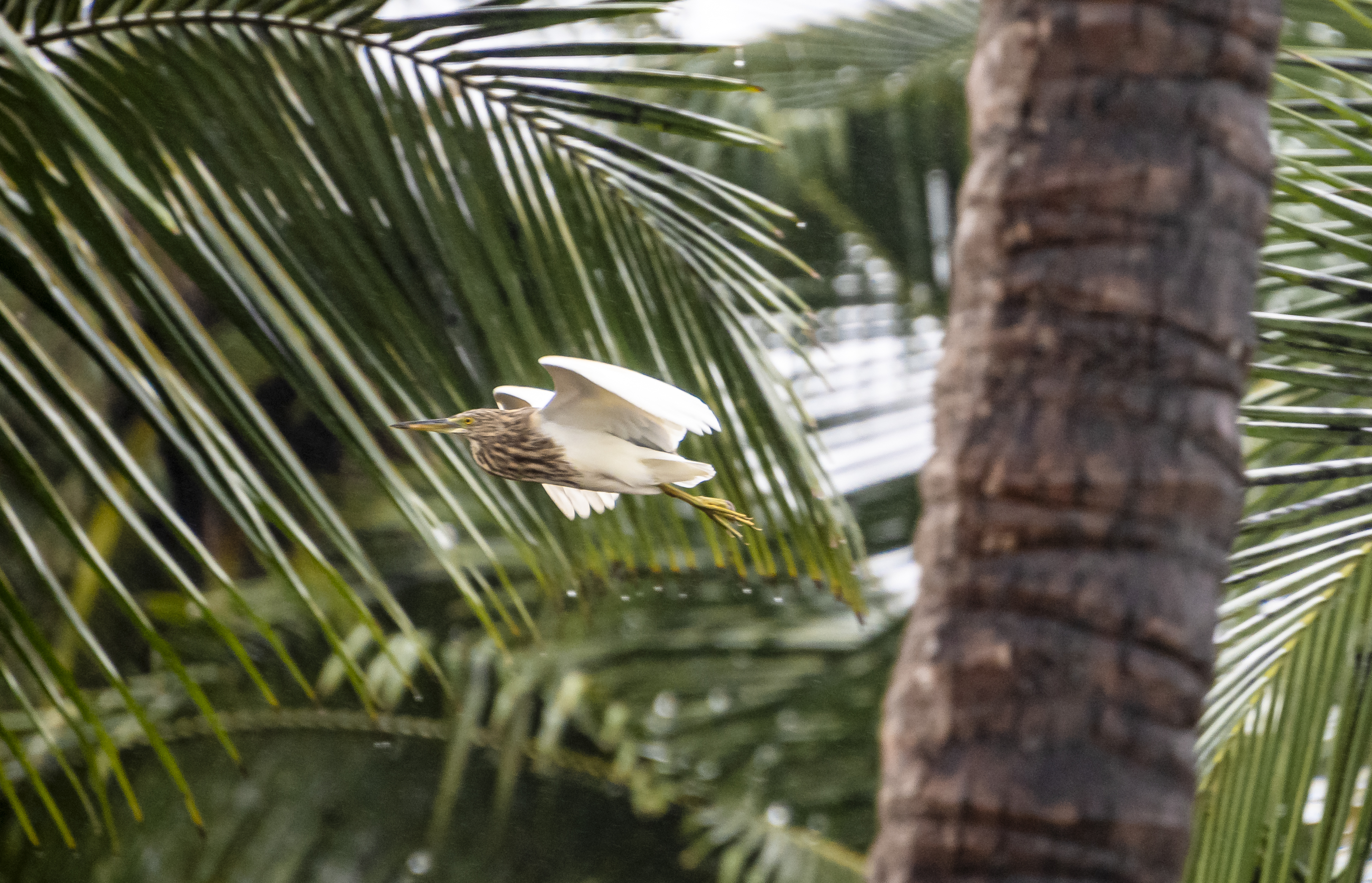
She unfurled her brilliant white wings and casually and elegantly floated away, the transformation was incredible.
I saw a few more of them flying next to the beach that evening.
Indian Paradise Flycatcher (Terpsiphone paradisi)
Flying around in the garden that evening in exuberant circles was this vibrant fellow. It was a male Indian Paradise Flycatcher of rufous coloration. Females have a greyish throat and lack the males’ distinct blue eye ring.
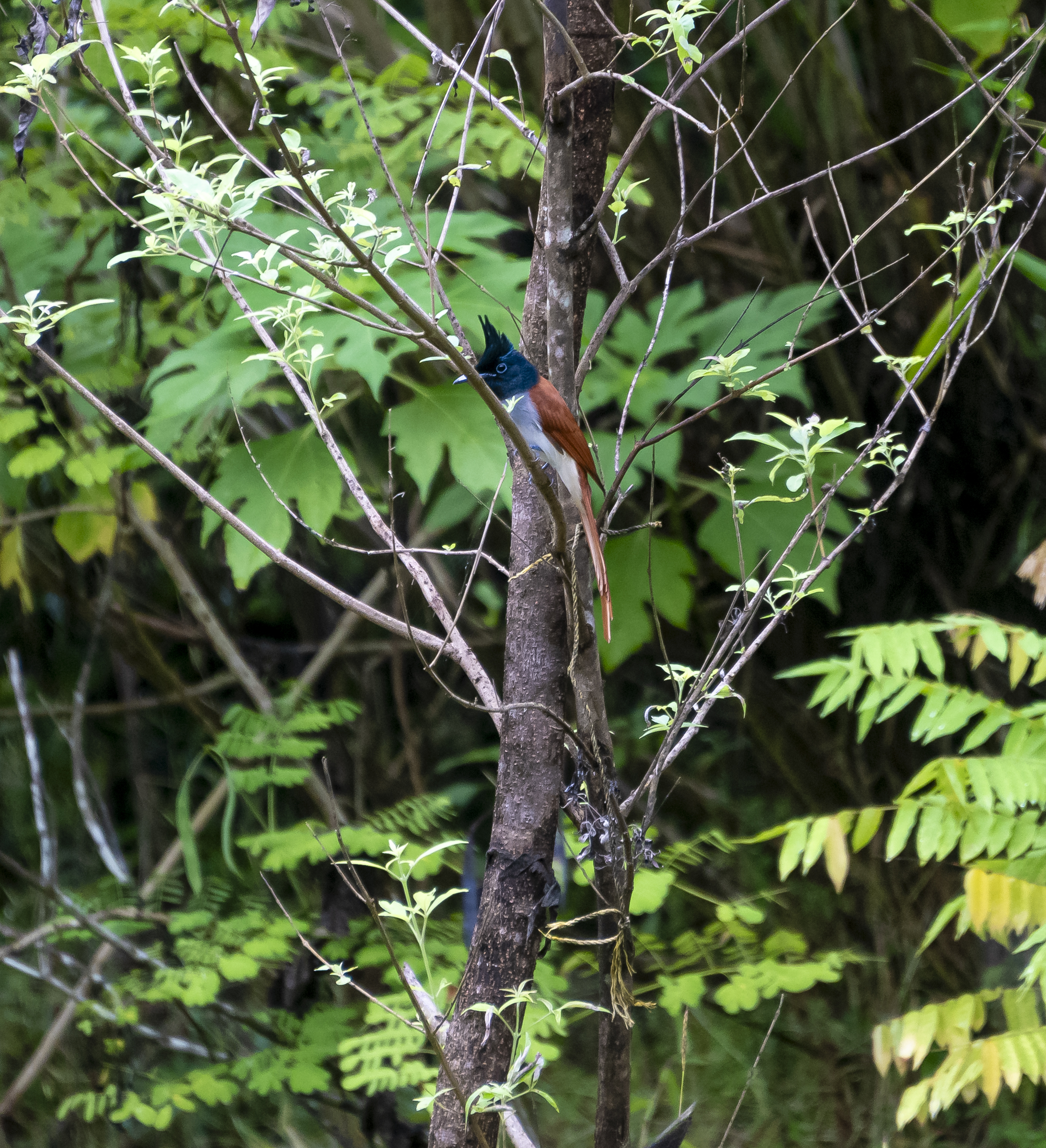
He and his white, long tailed friend were conducting a delightful ballet of movements around us catching insects. I really wish I was able to get a few shots of that dance.
Purple-rumped Sunbird (Leptocoma zeylonica)
A bright metallic sapphire bobbing around on a branch caught my eye.
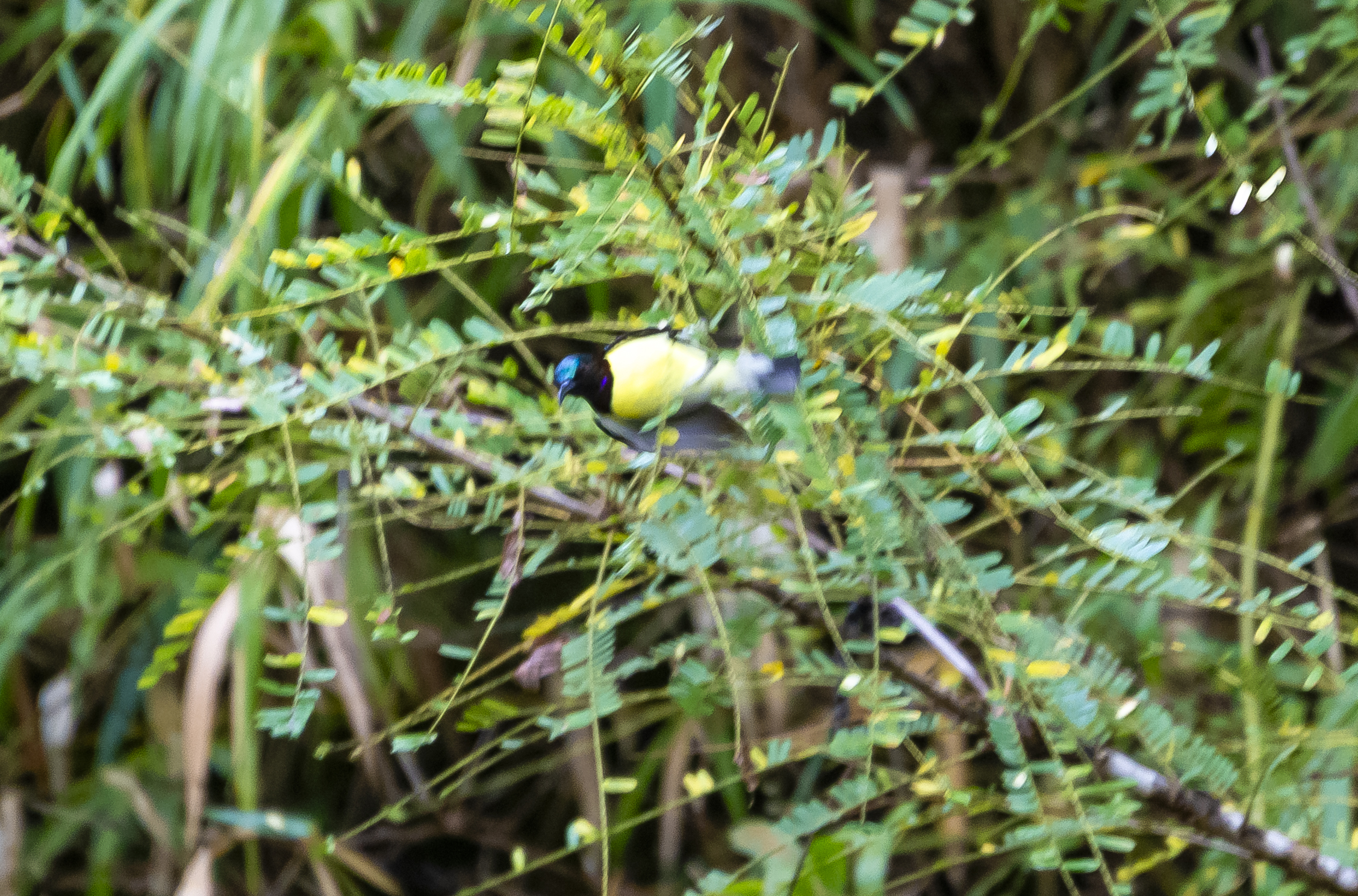
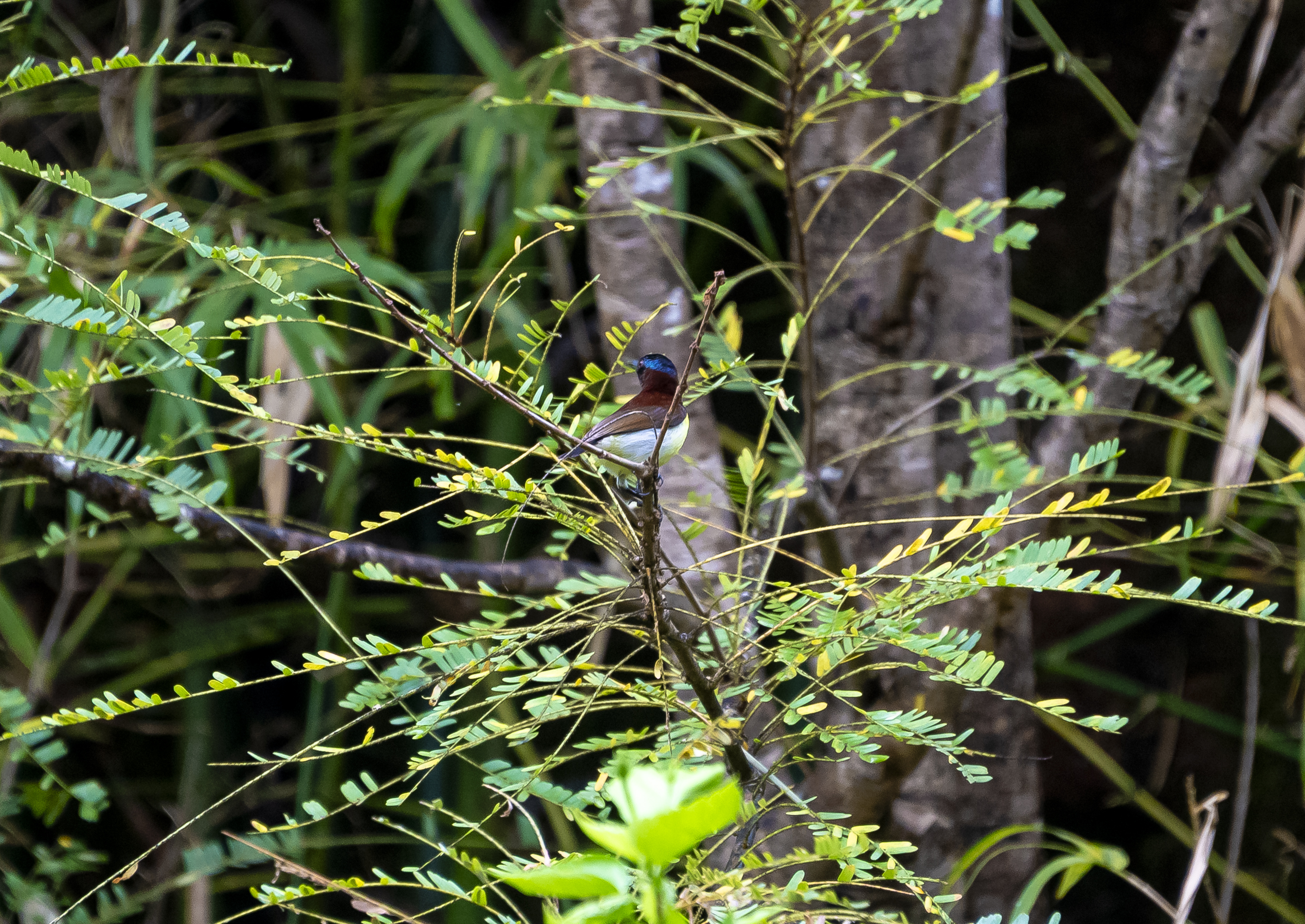
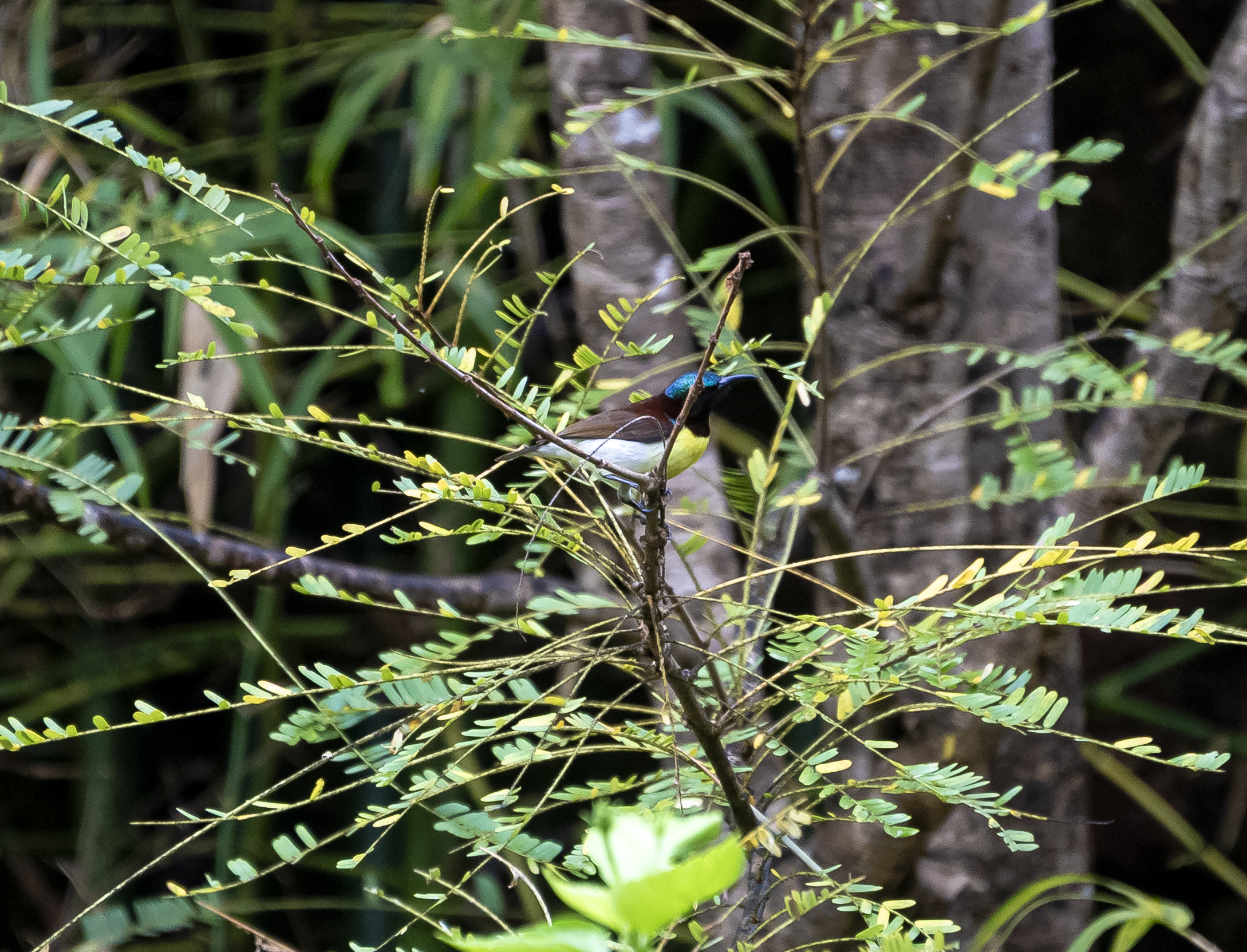
It was a Purple-rumped Sunbird, most likely a male. Sunbirds are nectar feeders and their shape and size, and especially the beaks resembles those of humming birds even though they are not related; a good example of convergent evolution.
Black-hooded Oriole (Oriolus xanthornus)
And then there was a golden-yellow flash high up on the pipal (sacred fig) tree.
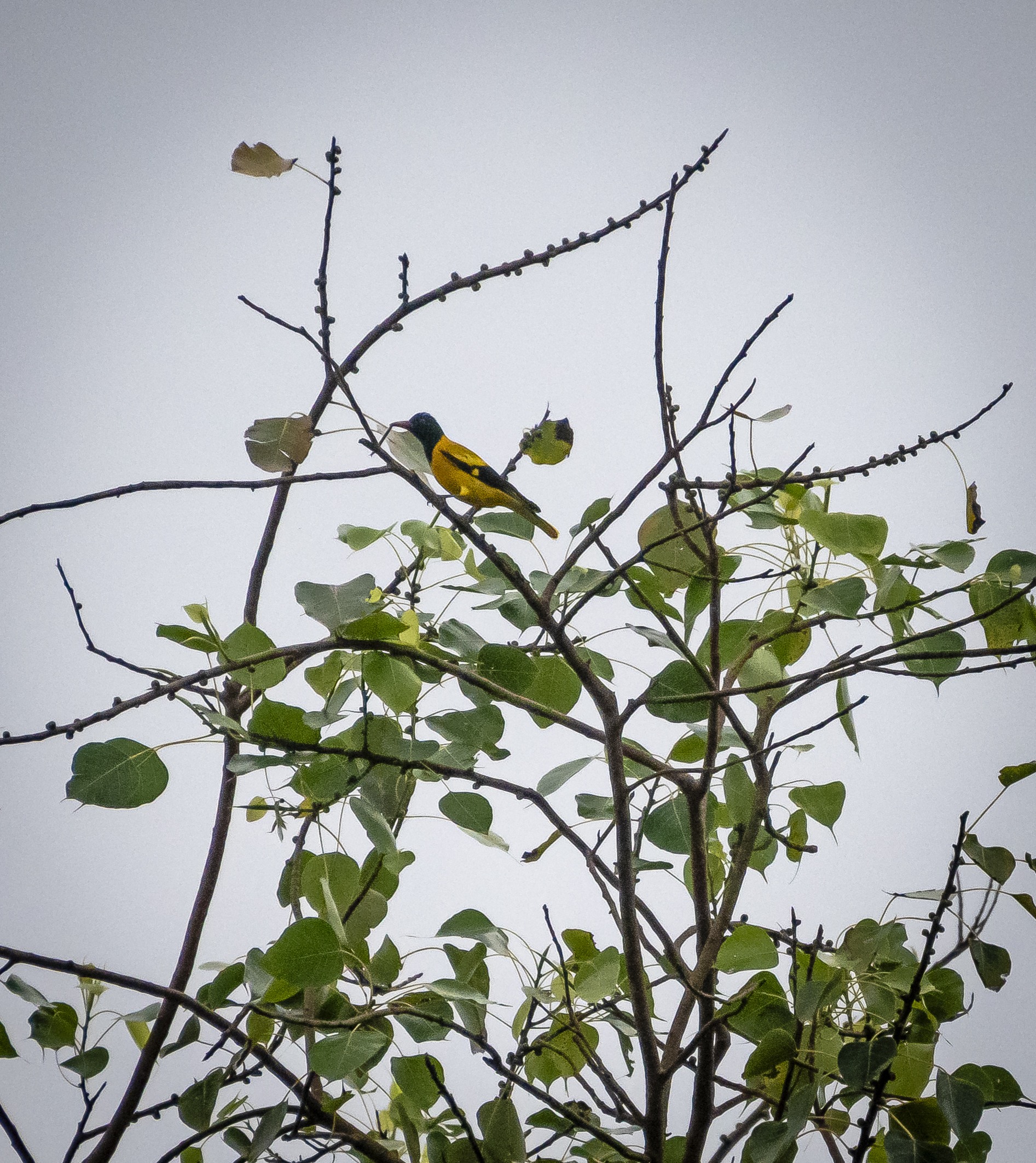
This was a Black-hooded Oriole. Apparently, the name “Oriole” originally comes from the classical Latin word aureolus, which literally means “the golden one.”
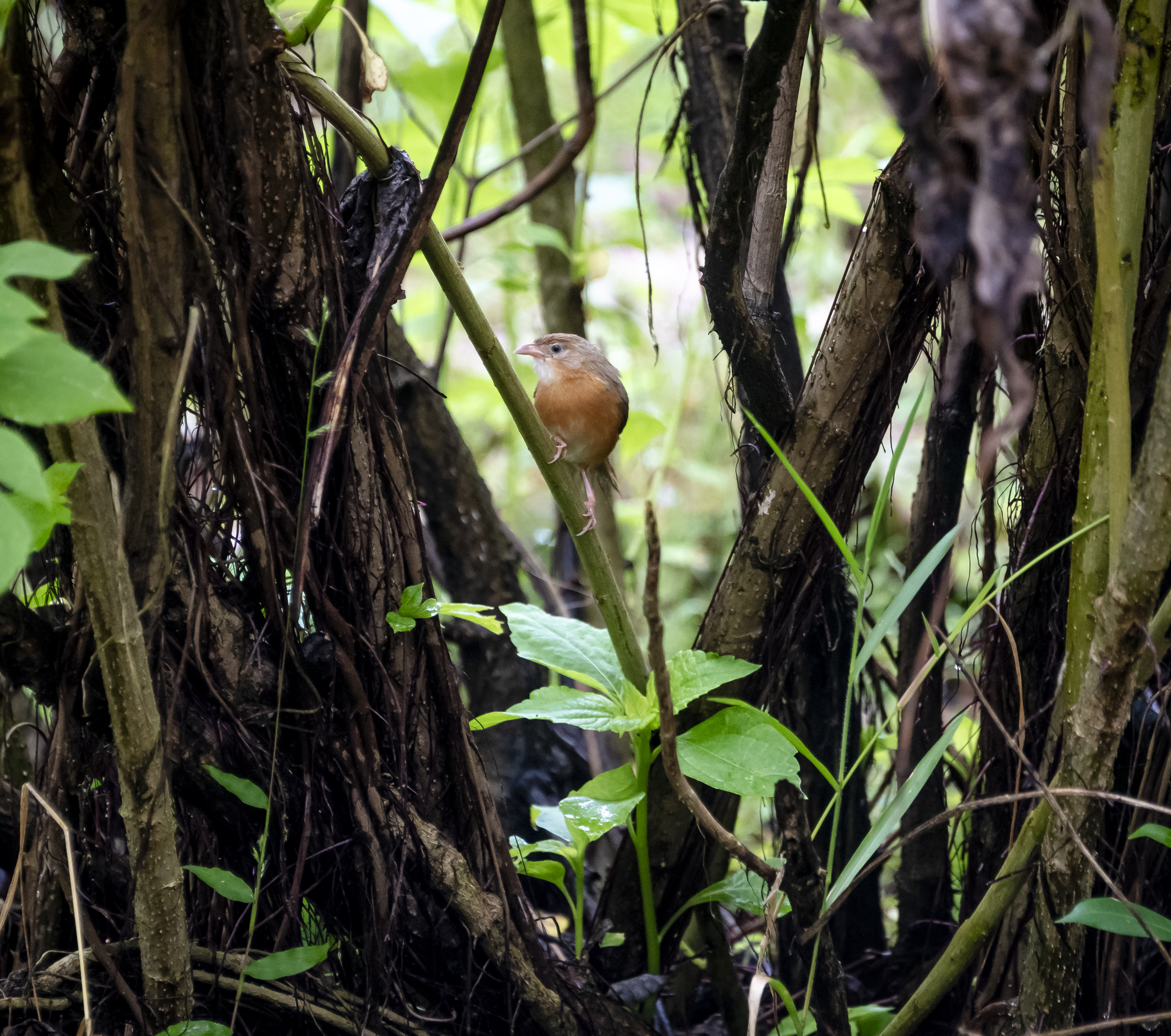
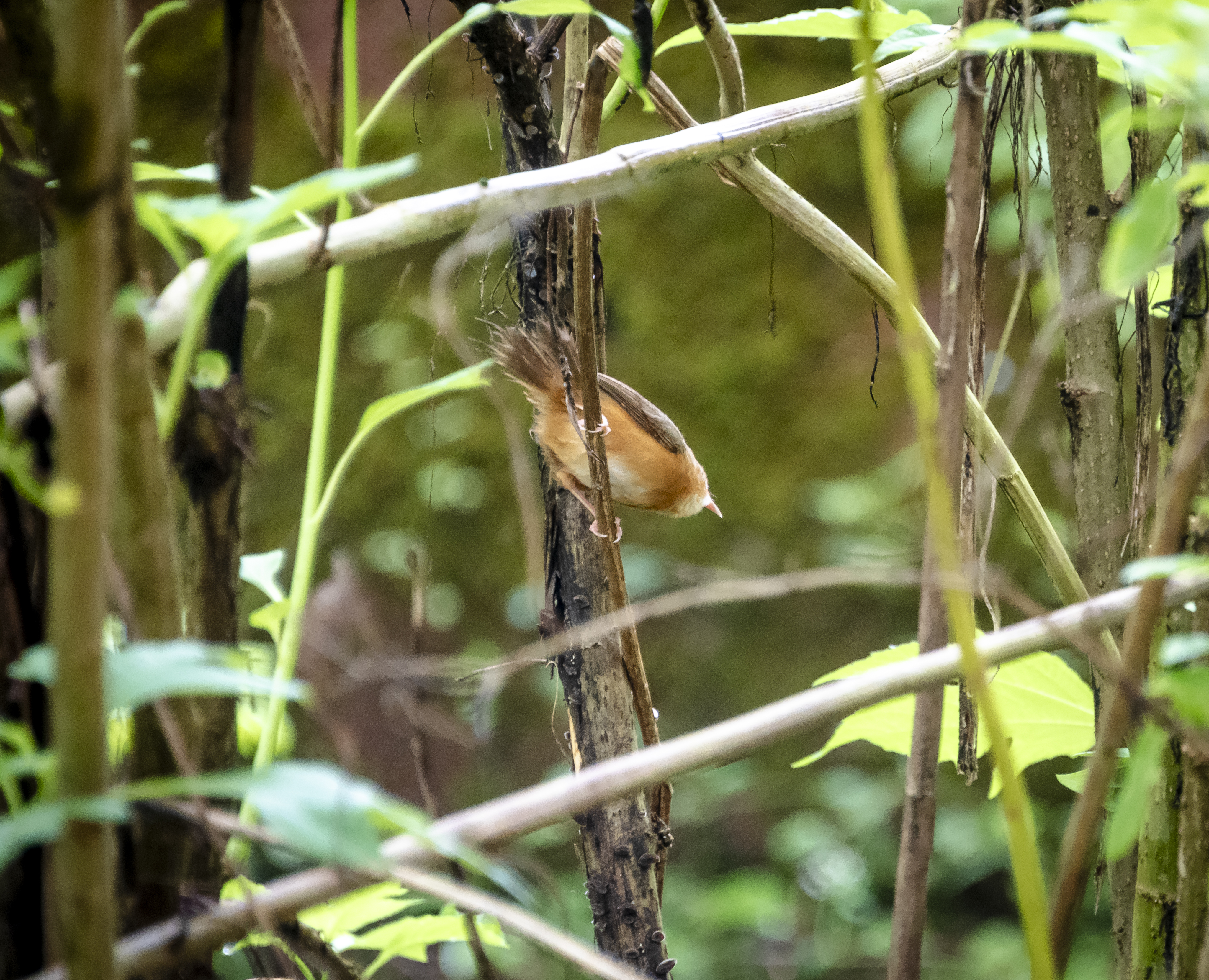
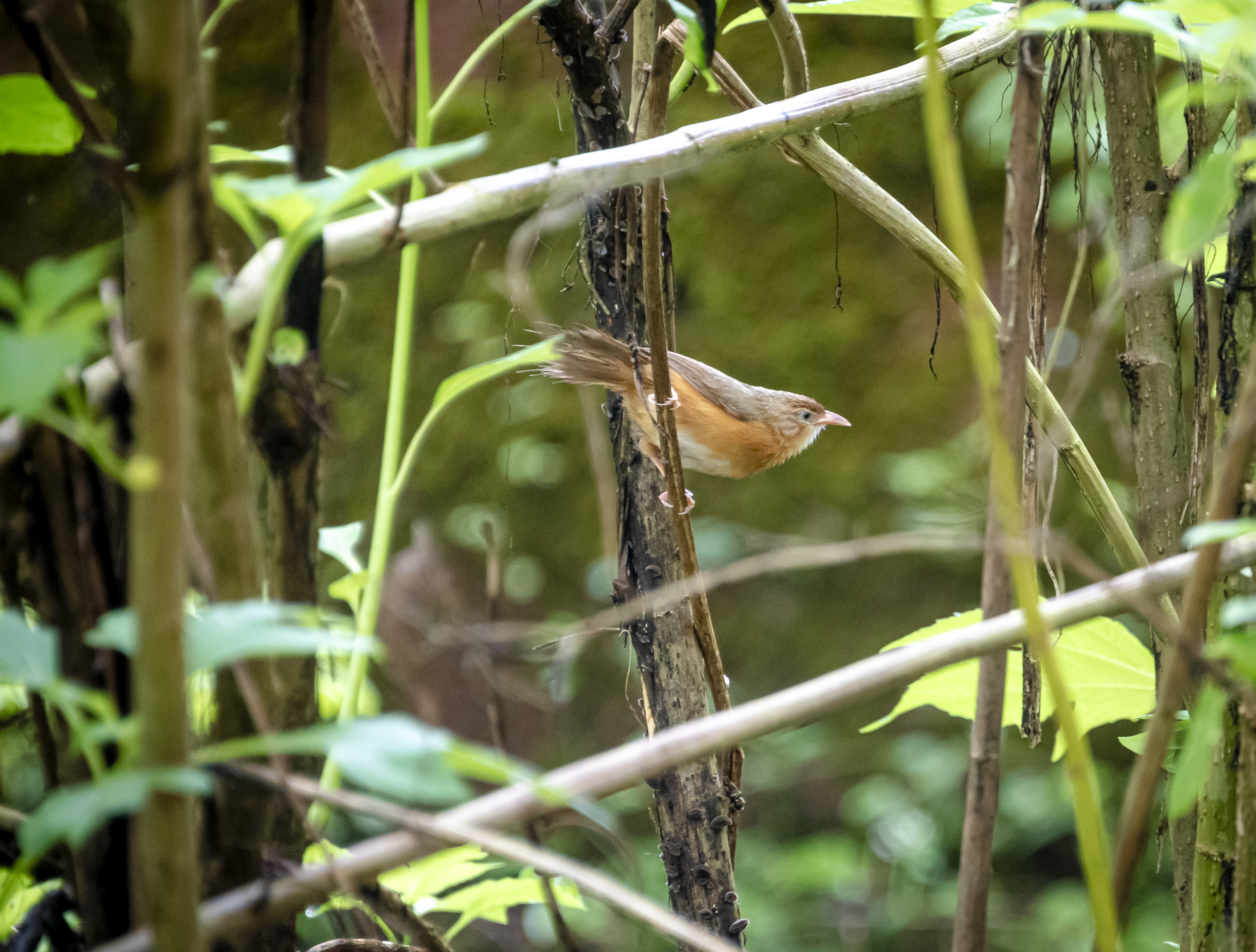
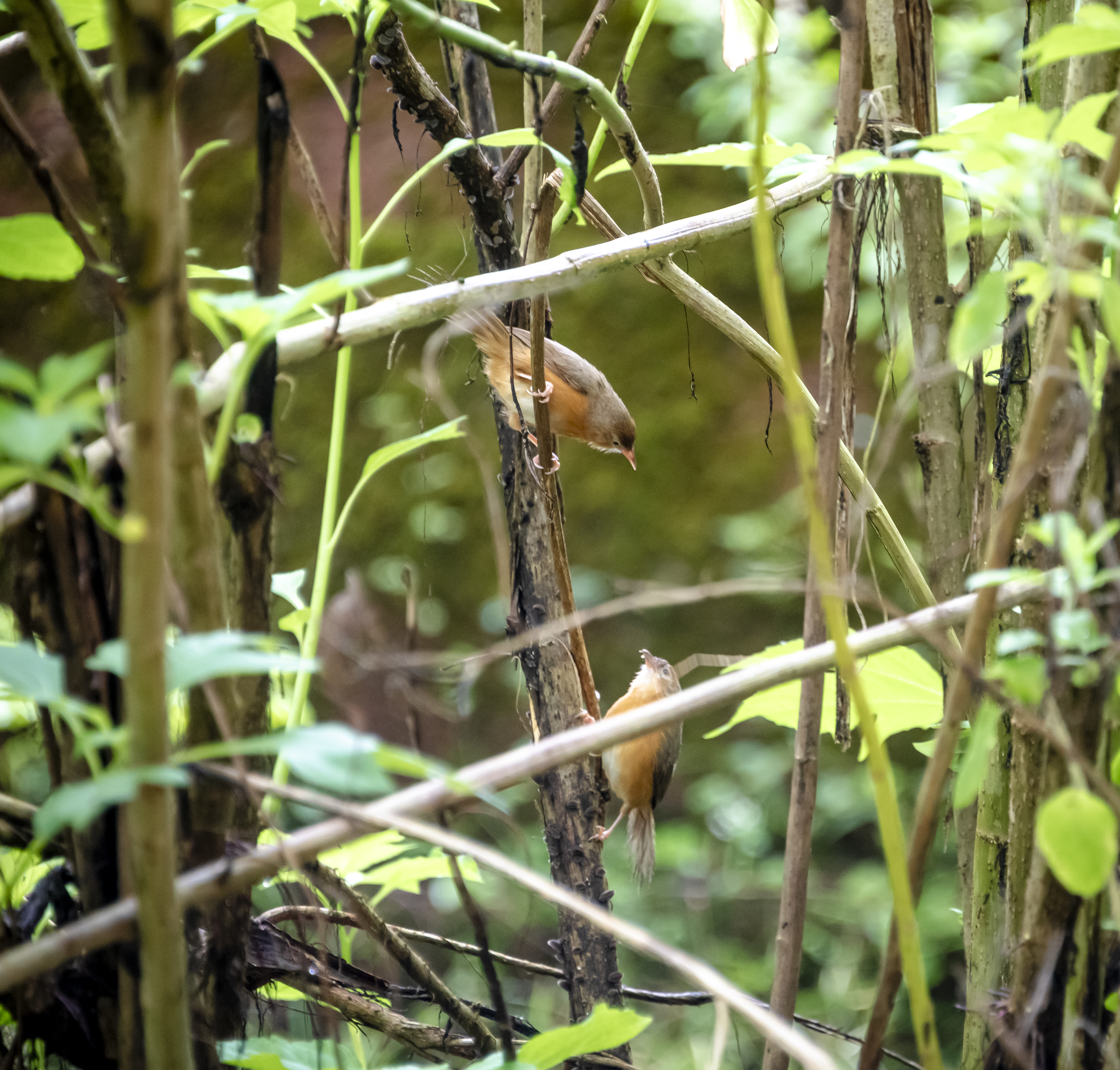
Tawny-bellied Babbler (Dumetia hyperythra)
Closer to the ground, restlessly chirping and hopping around in the undergrowth and scrub was a flock of tiny round Tawny-bellied Babblers, likely having a feast of insects and larvae.
Oriental Magpie-Robin (Copsychus saularis)
Close by, I noticed this tiny creature with a swagger of something much larger. I again assumed it to be a small magpie or a raven.
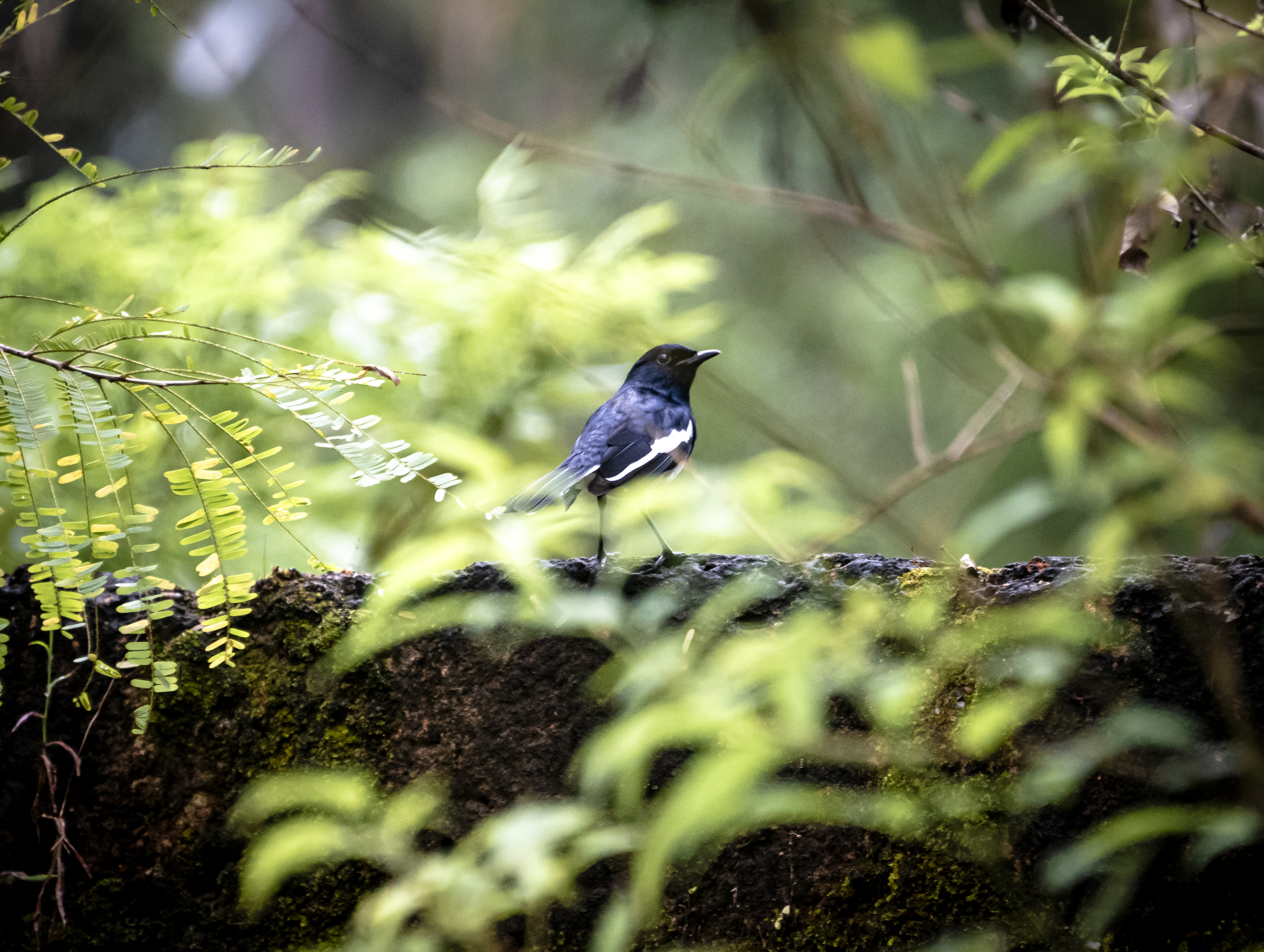
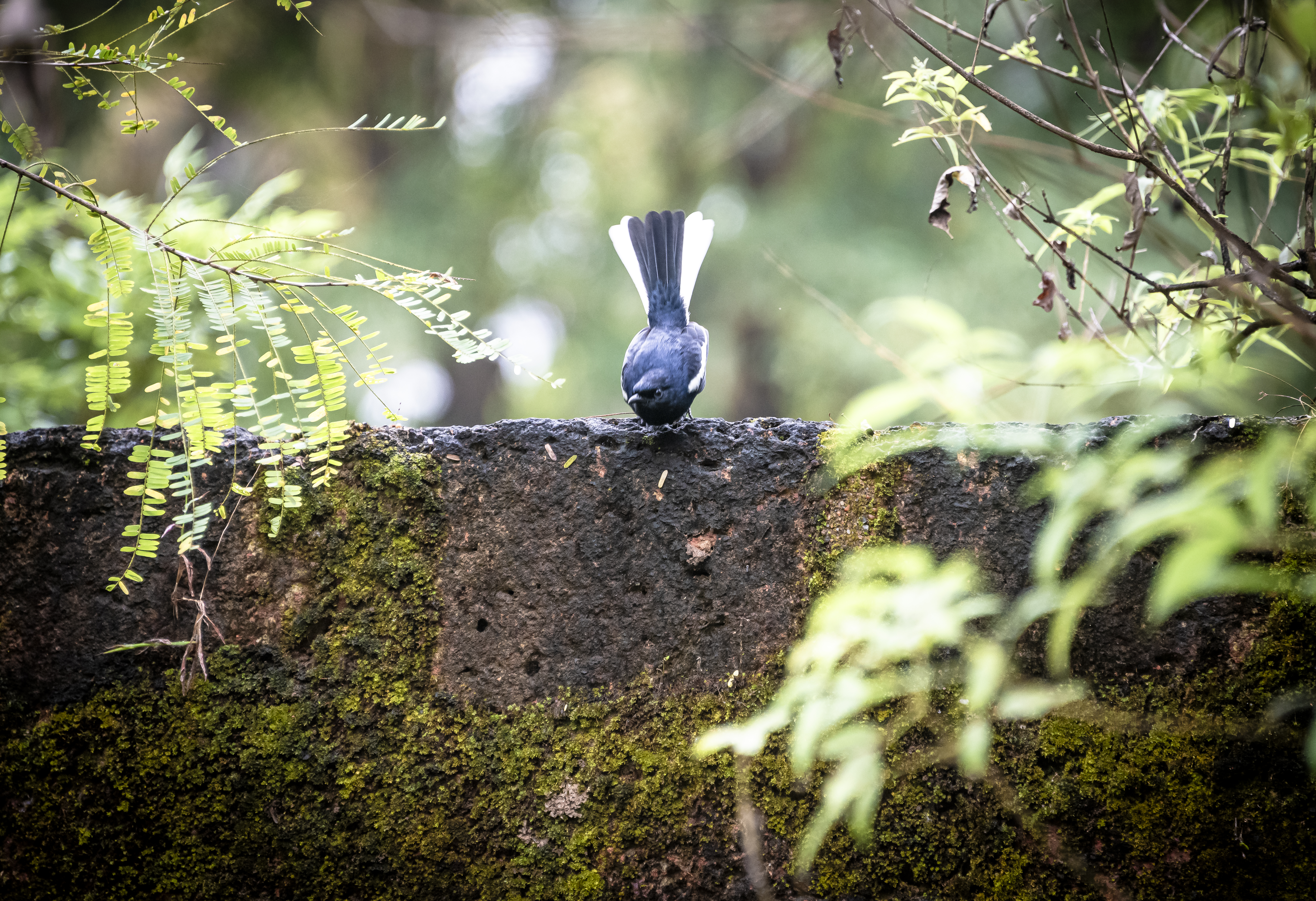
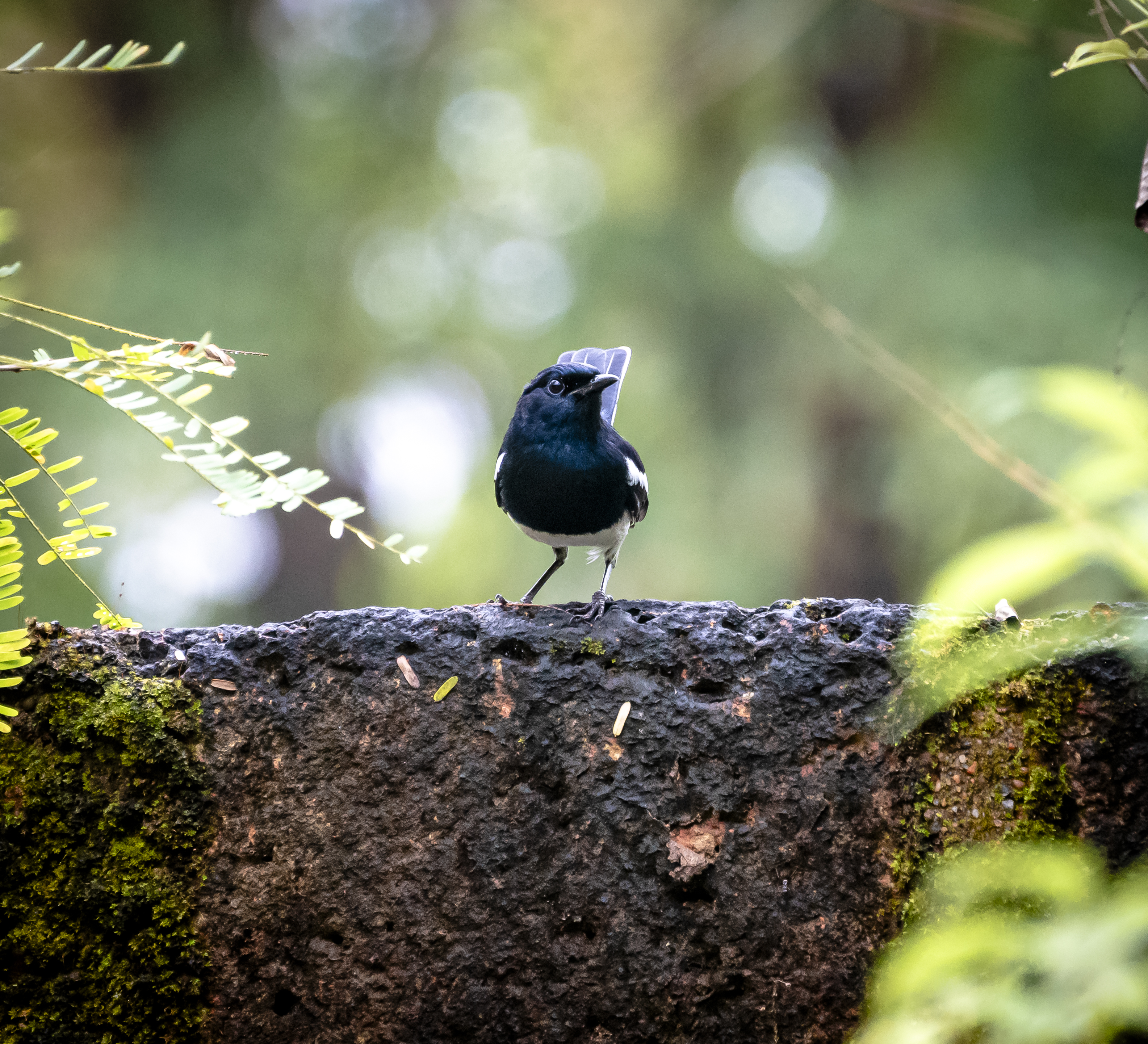
Lexically I turned out to be half correct and this jaunty songbird is indeed related to the robin family. Its movements on the laterite wall were bold, sprightly, and almost theatrical and she did not mind me coming up close to shoot her portraits.
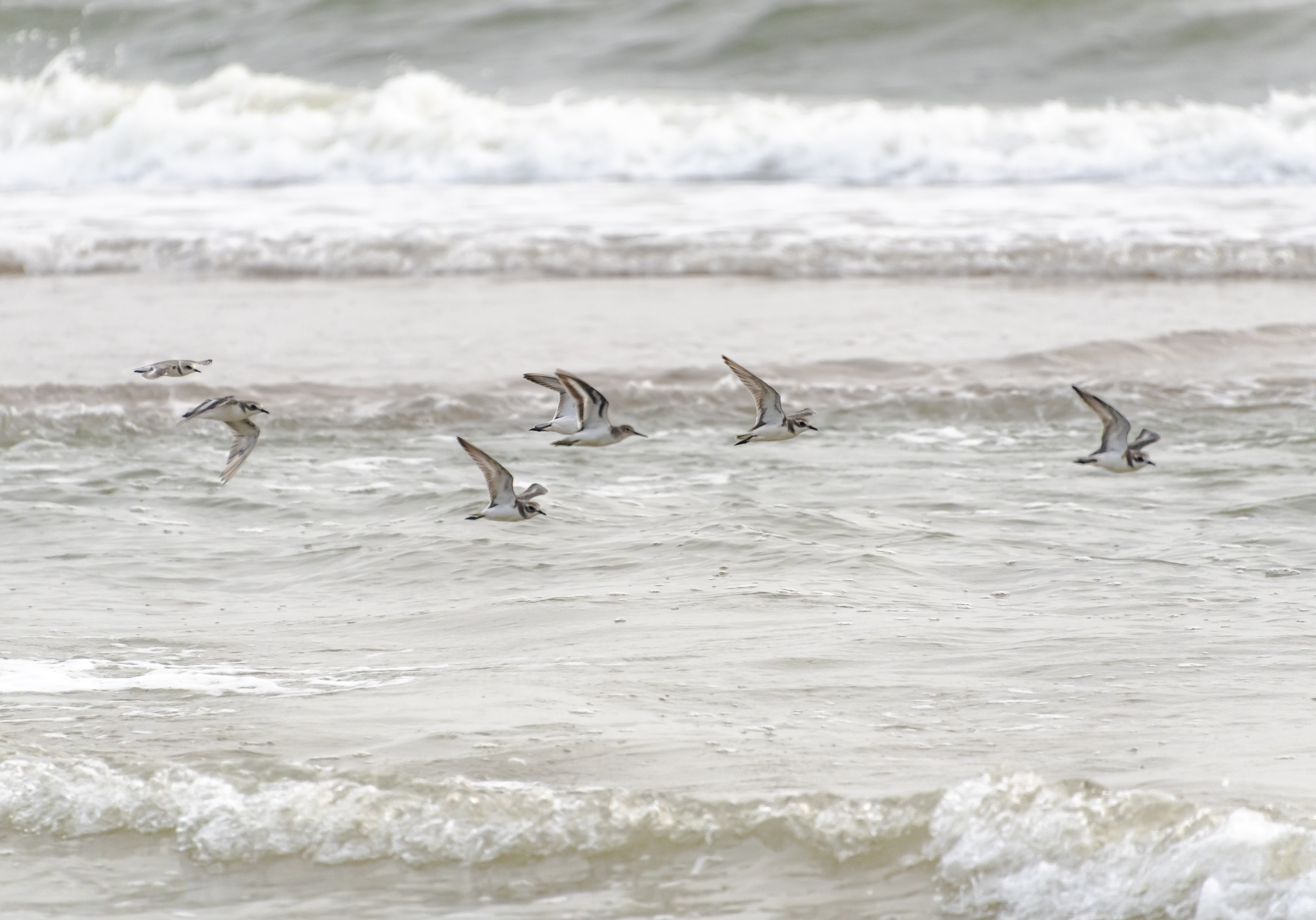
Eurasian Whimbrel (Numenius phaeopus)
On a stormy beach overlooking the Arabian Sea that day, I saw these unassuming pale brown birds fighting against the wind and the surf, labouring ahead. The wind was so strong that these five birds appeared to be almost stationary in flight, even though the massive energy they were spending was very apparent.



From my research they appear to be whimbrels, among the great long-distance travellers of the bird world. Each year, they migrate from their breeding grounds in northern tundra regions like northern Europe and Siberia to spend the winter in warmer regions like the Indian coast. Being able to spot and shoot them doing what they do best, here in Baindur was definitely fortunate in retrospect.
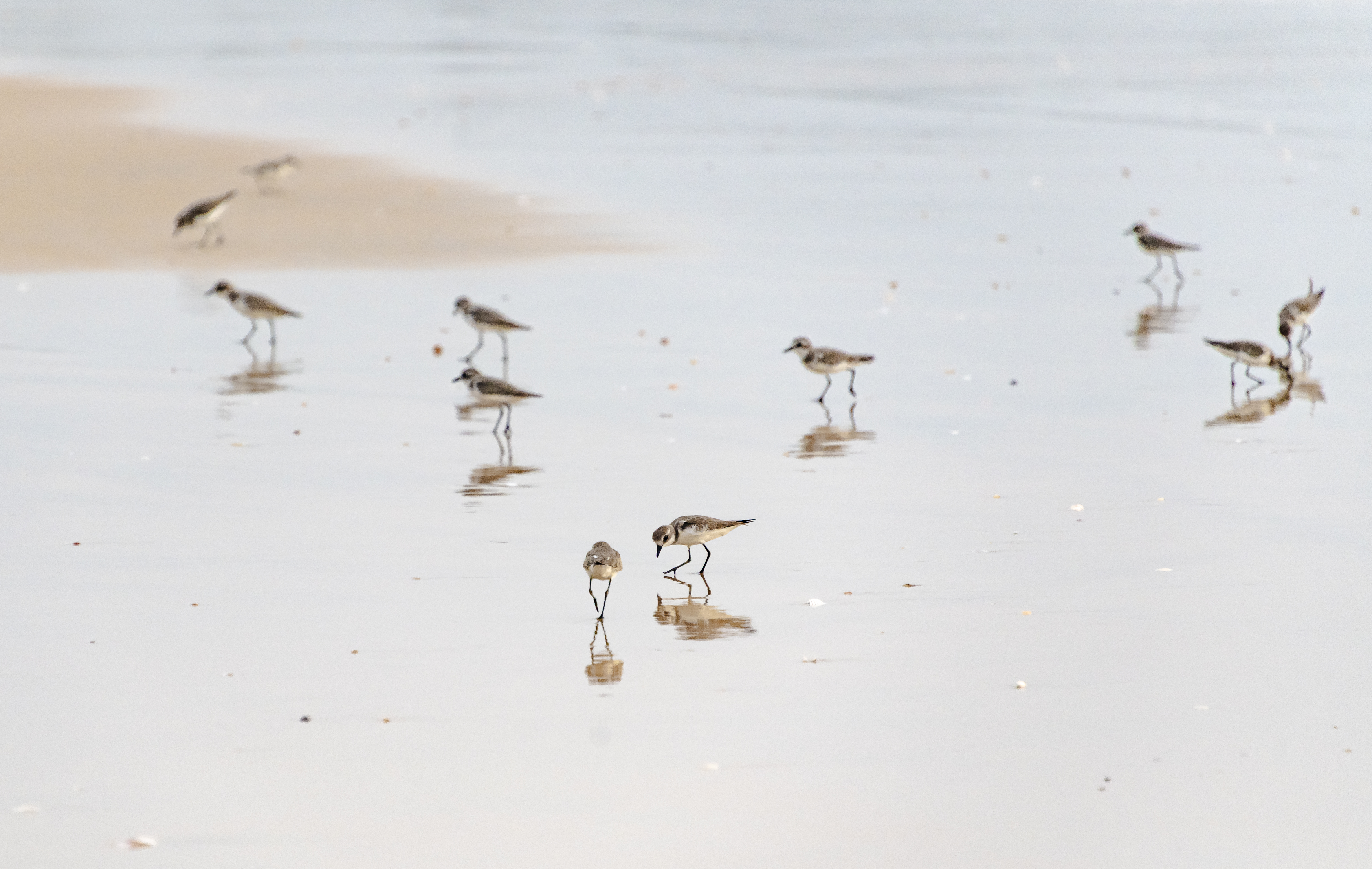
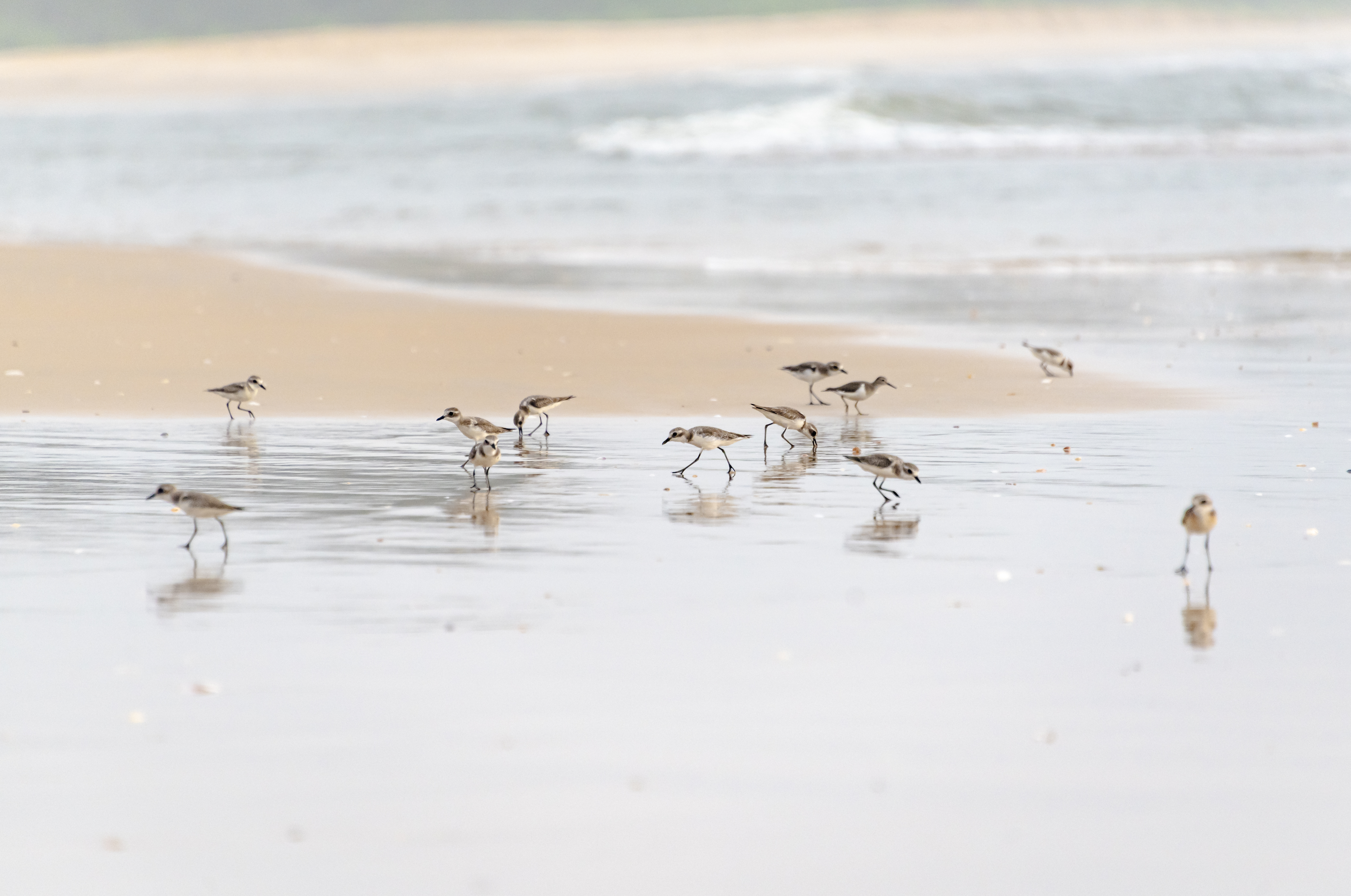
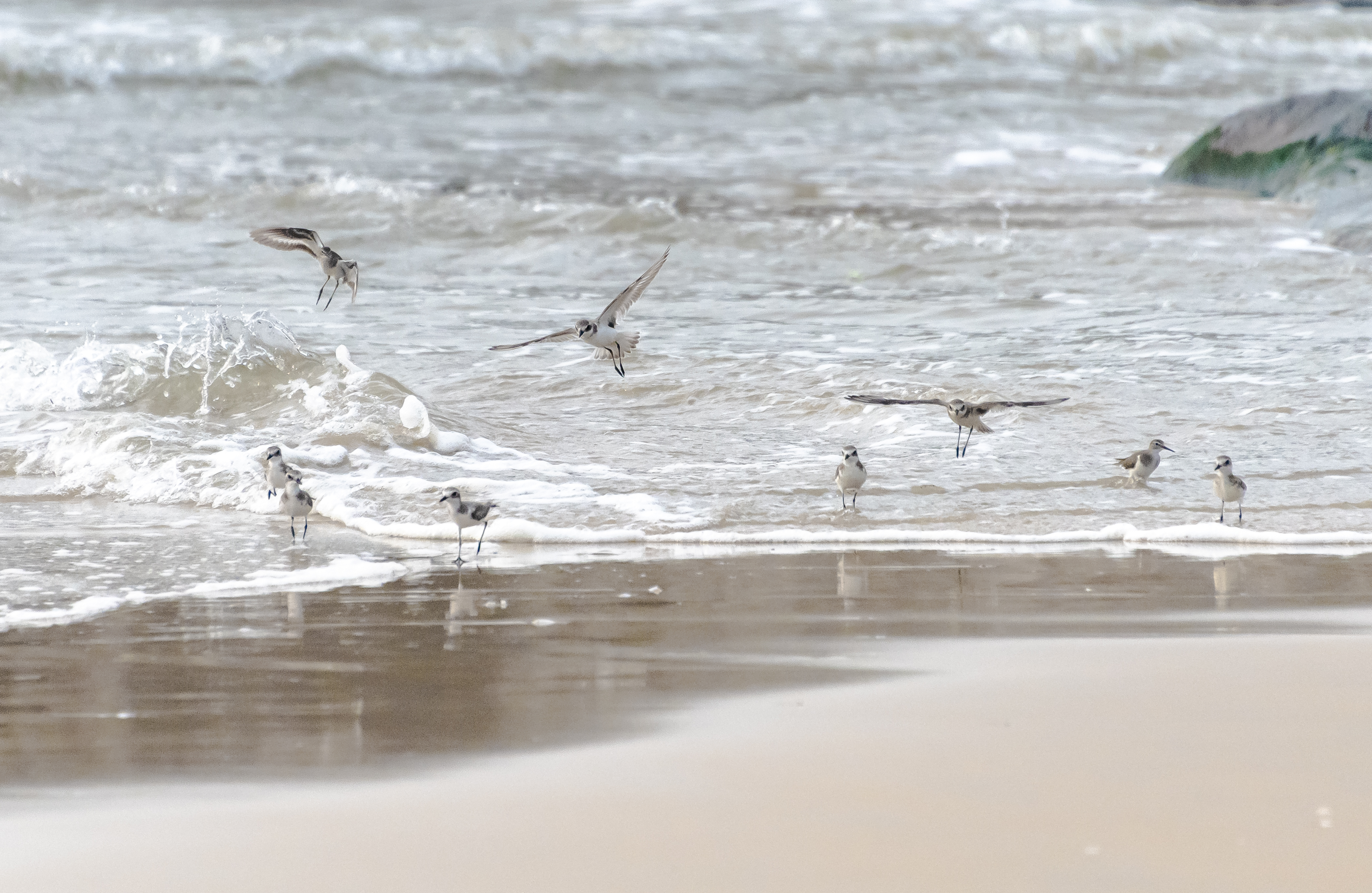
Kentish Plover (Anarhynchus alexandrinus) and Common Sandpiper (Actitis hypoleucos)
On a calmer clearer day, I spent some time with some of the smaller relatives of the whimbrels skittering and scampering around the beach and sometimes flying around to a different spot.
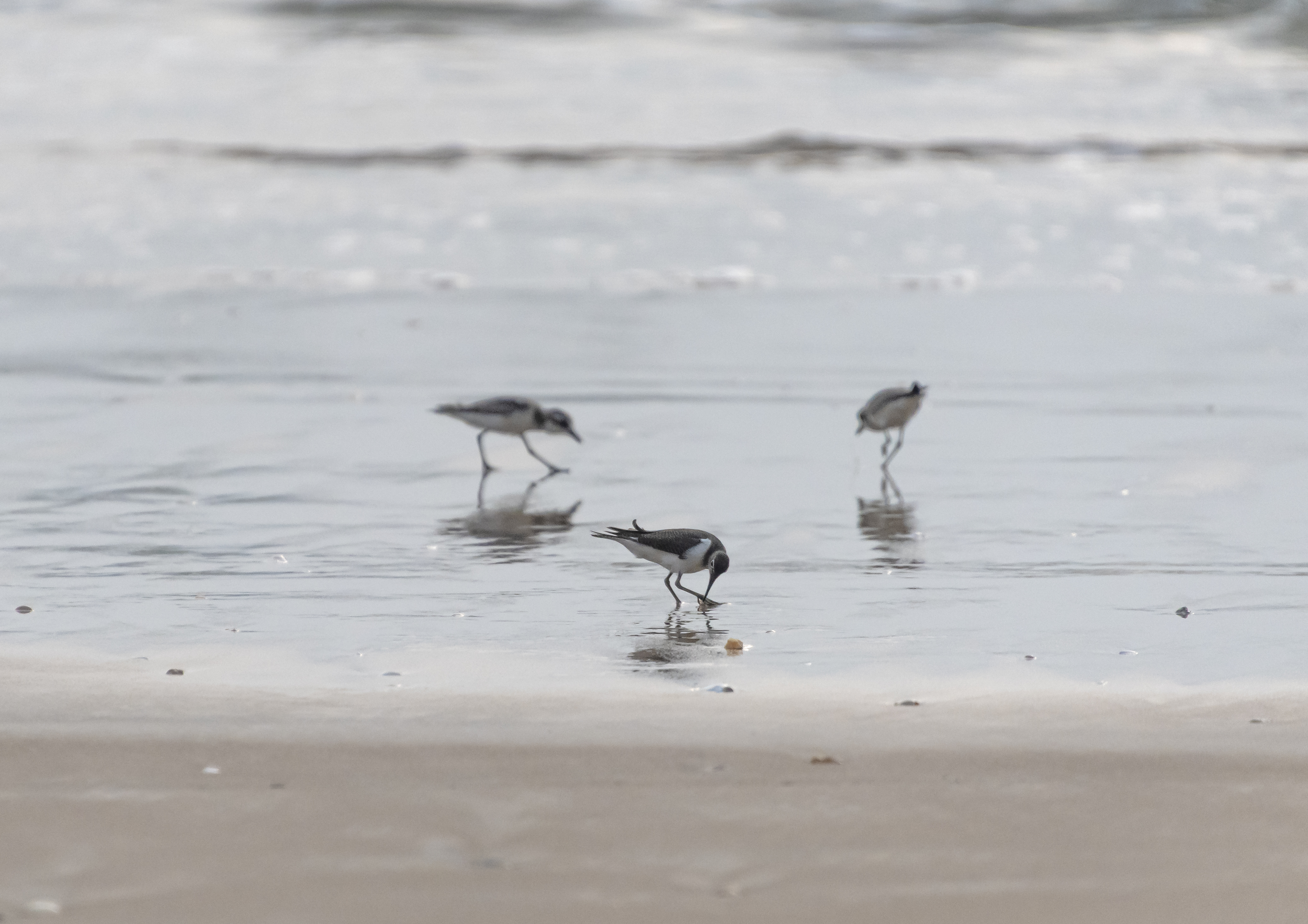
While reviewing these photographs I noticed that one individual in the flock did not look like the others. It had a longer beak and a different pattern of patches, even though they all had the same colour palette.
Here was a Common Sandpiper masquerading as a Kentish Plover, blending in their flock without missing a beat.
A most charming spot that we visited while in Baindur was the Ottinene hillock and Kshitija Nesaradhama, the viewpoint on the hill. The sight of the Byndoor River calmly flowing into the tumultuous Arabian Sea was quite breathtaking.

The road on the hill goes through surreal, bright green, marshy grasslands.
And here we came across some birds which were somewhat larger.
Great Egret (Ardea alba)
The Great Egret in her natural habital.
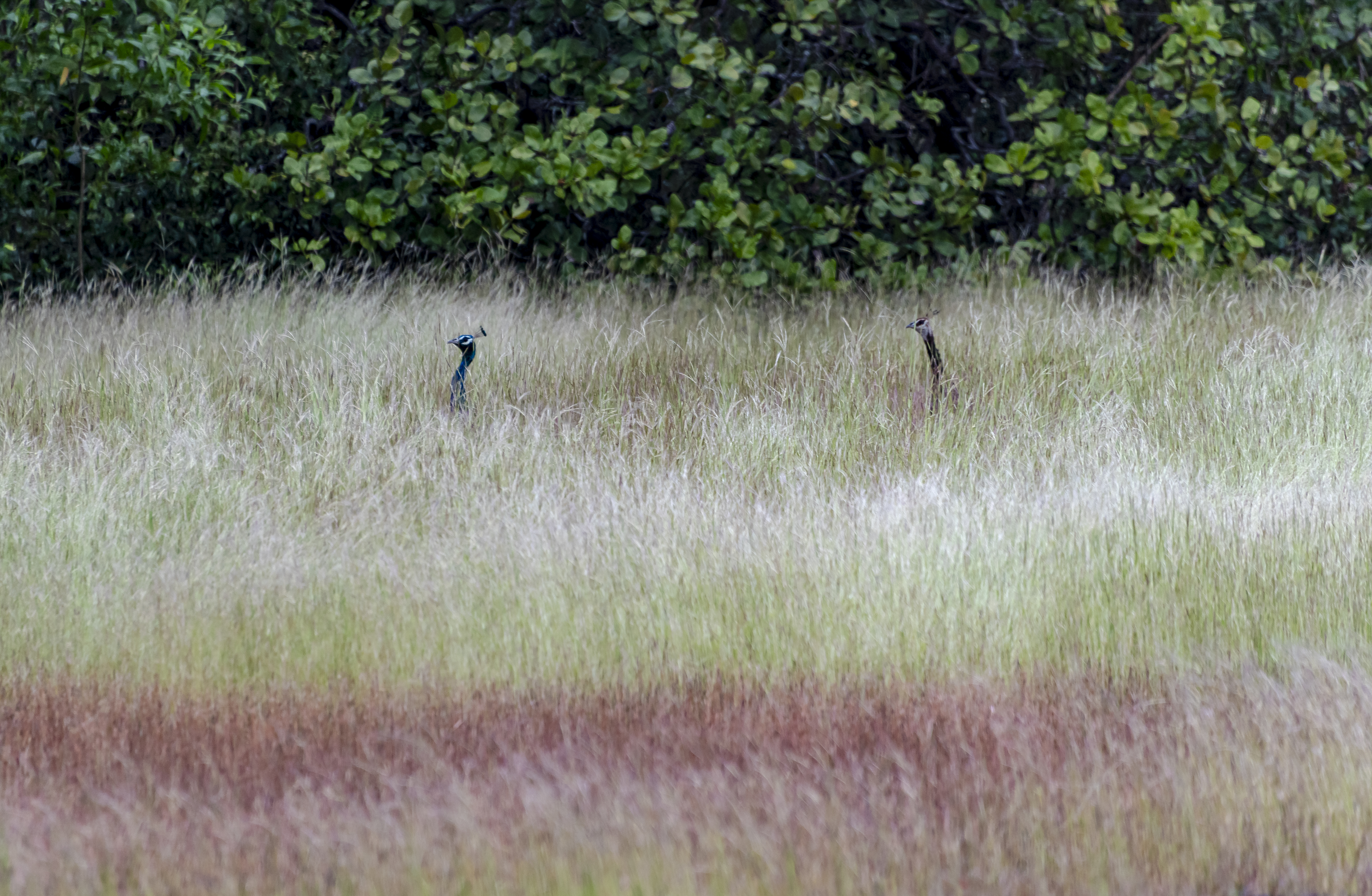
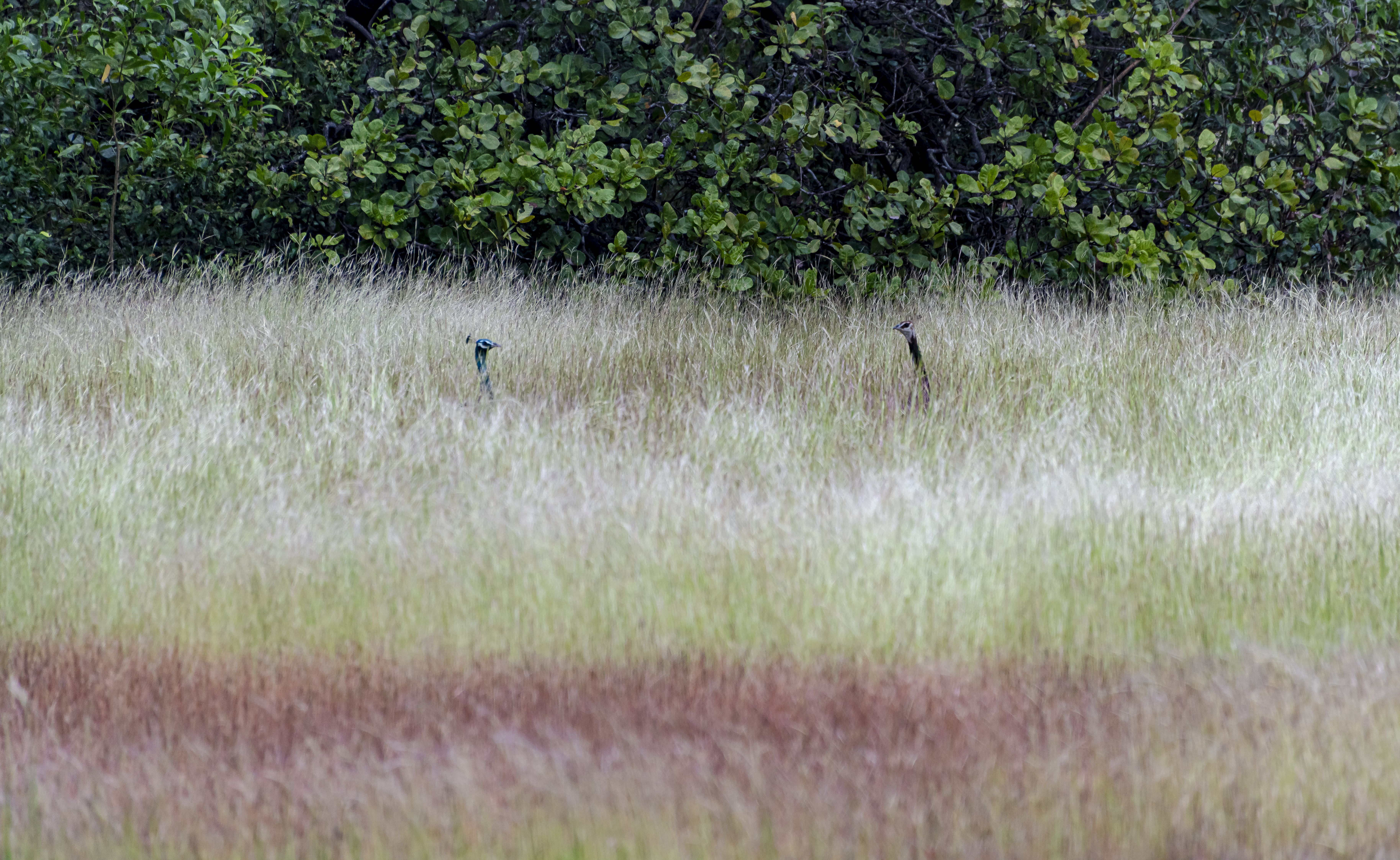
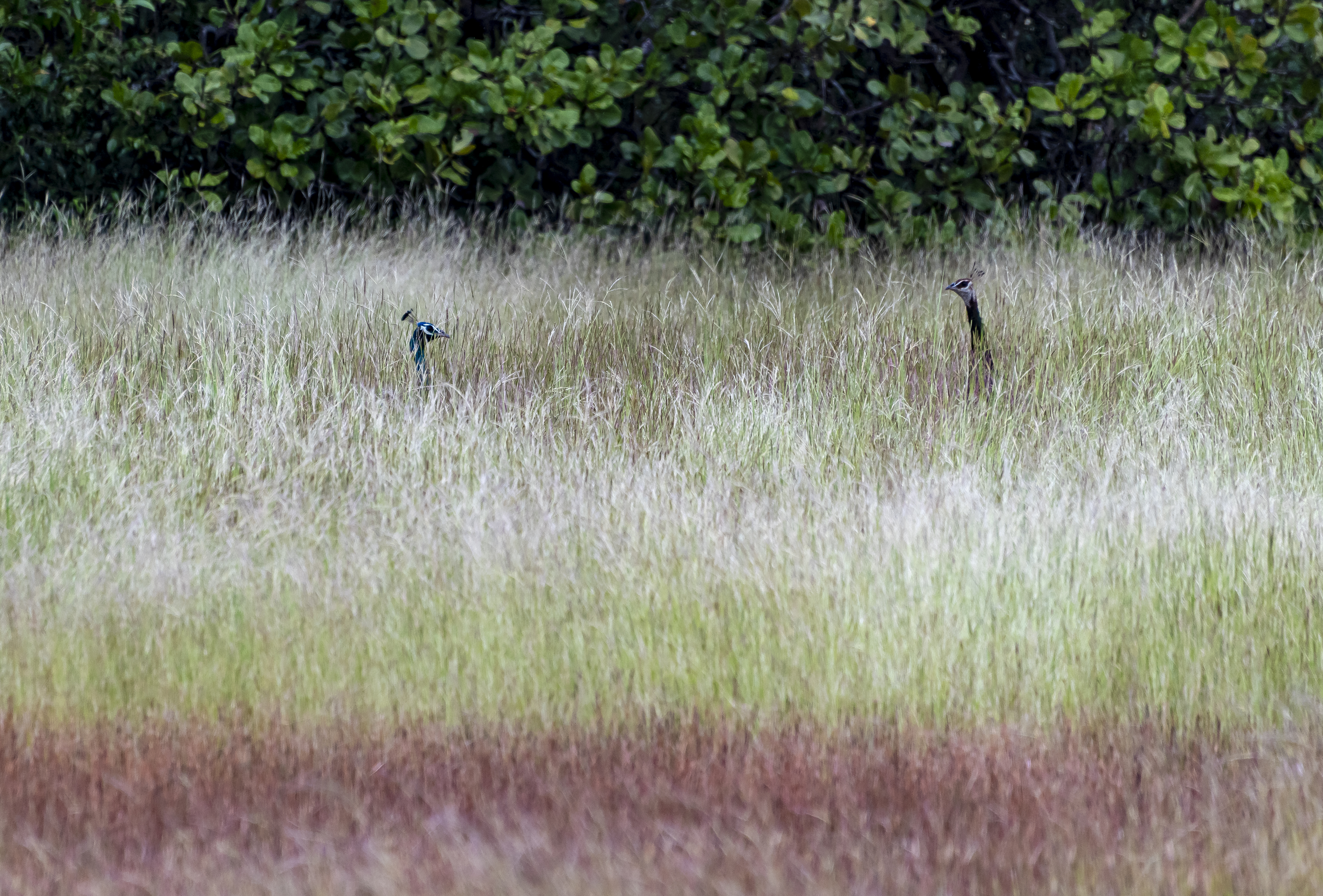
Indian Peafowl (Pavo cristatus)
A peacock and a peahen in a clandestine courtship ritual.
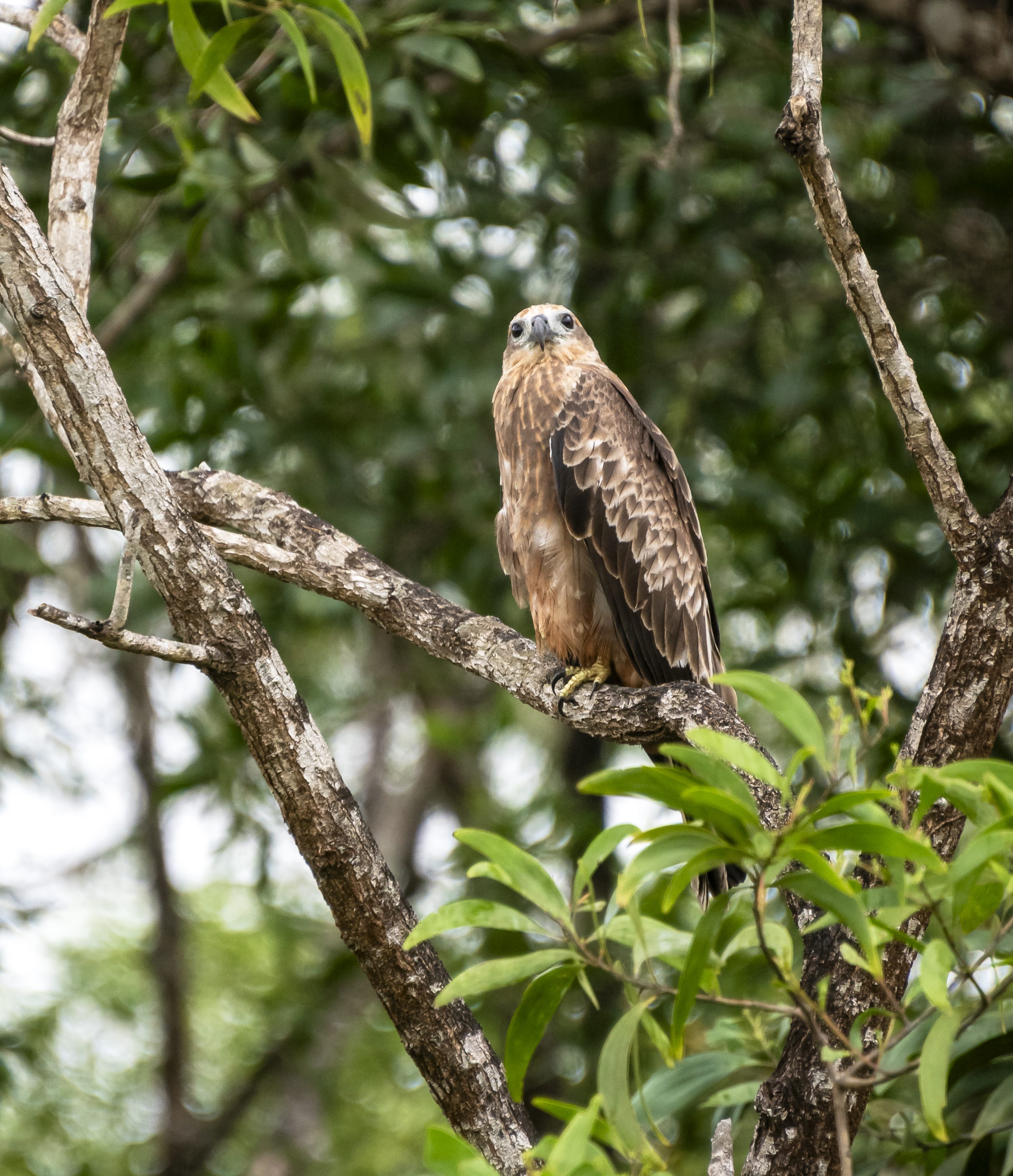
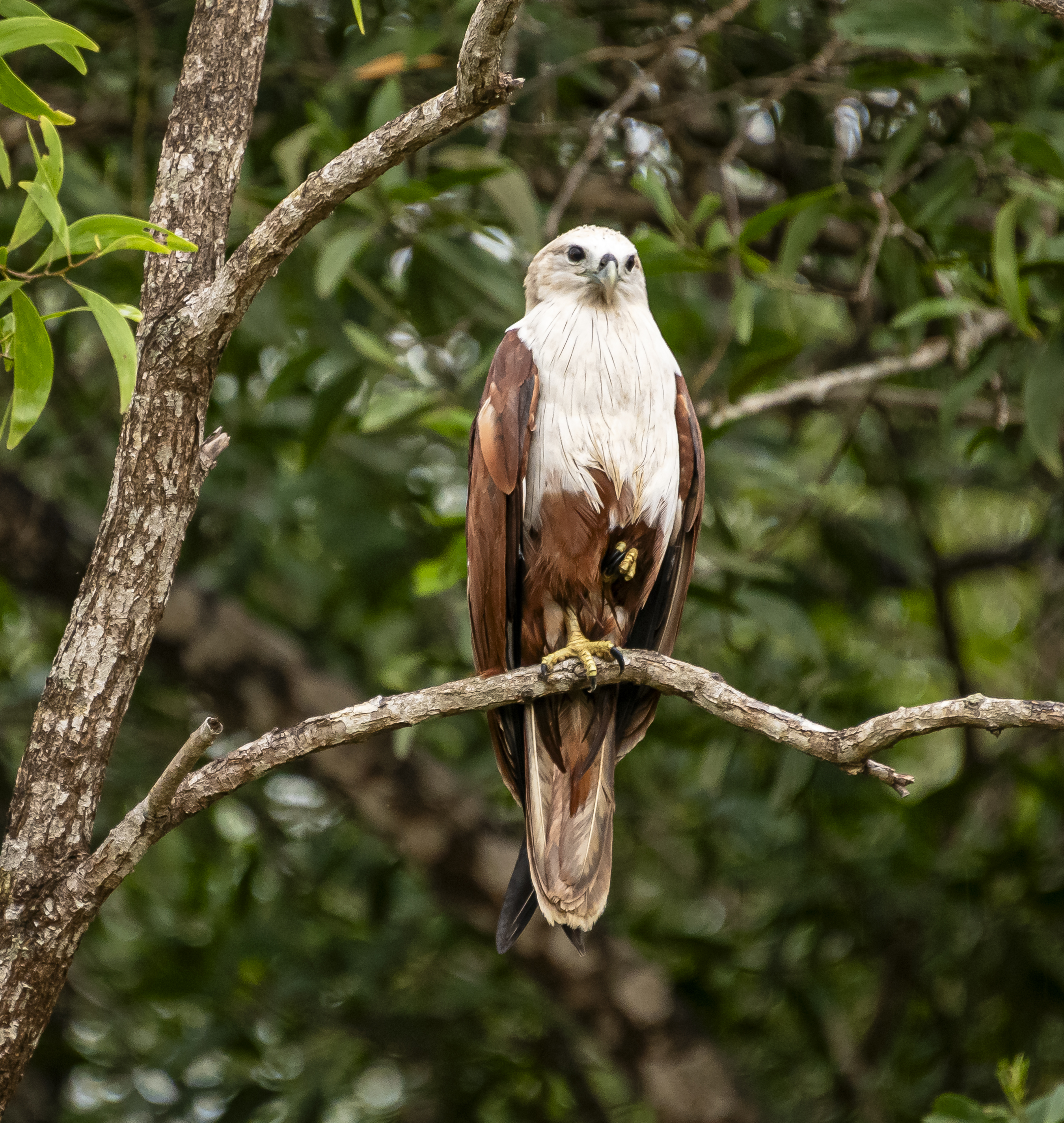
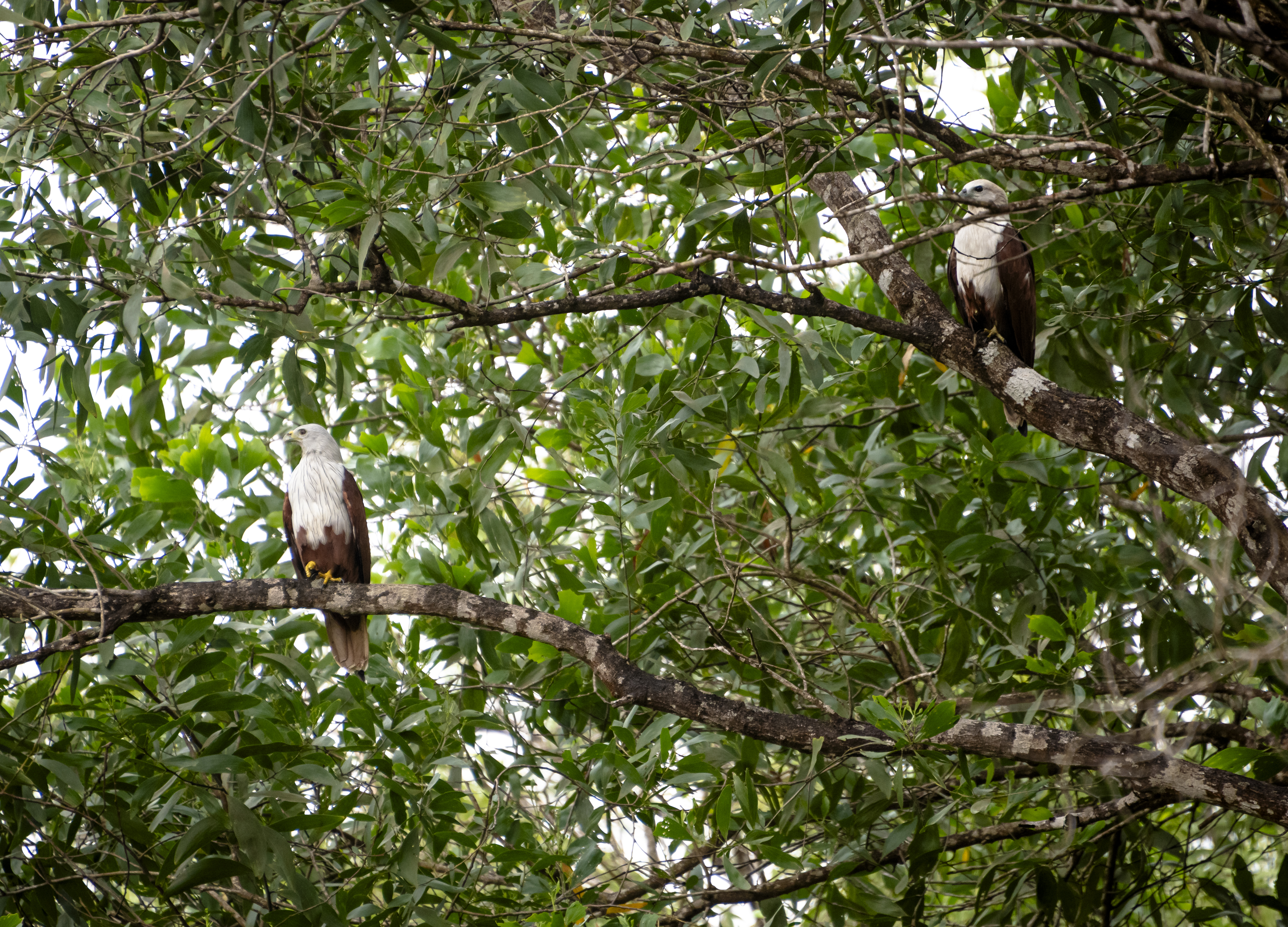
Brahminy Kite (Haliastur indus)
A family a gorgeous looking Brahminy Kites, with both juvenile-brown and adult-white plumages.
For a place that seemed so still, Baindur was remarkably restless. There was something perpetually darting through the foliage, calling from the treetops, stalking through the grass or battling the winds along the shore. A home for many, and a winter destination for many others.
And these were only the avians I managed to photograph. Many more remained out of sight, announcing themselves through unfamiliar calls or fleeting flashes of colour.
Three days were barely enough to begin discovering this little corner of the coast. Perhaps that’s reason enough to return.


Leave a Reply